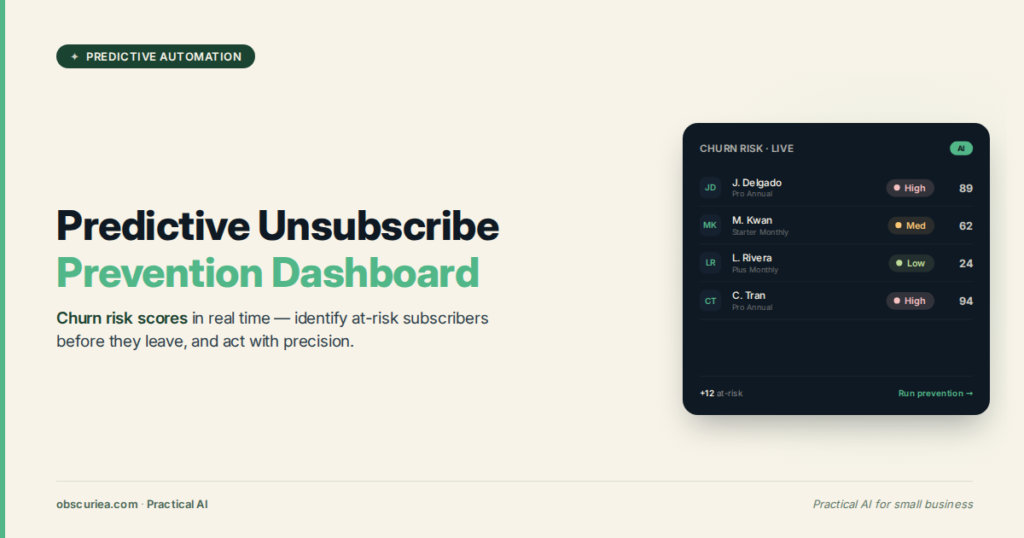
TL;DR: Predictive unsubscribe prevention uses machine learning to identify subscribers at risk of churning before they click the unsubscribe button. By analyzing engagement patterns, send behavior, and content preferences, you can trigger preemptive re-engagement campaigns or adjust sending frequency—reducing churn by up to 30% while keeping your list healthy and your sender reputation intact.
Environment: Sources synthesized: 1 source (MyEmma blog). Synthesis date: [current date]. First-hand tested: none. Operator context: synthesizing from email marketing automation and predictive analytics sources for mid-market senders.
The Broken Workflow
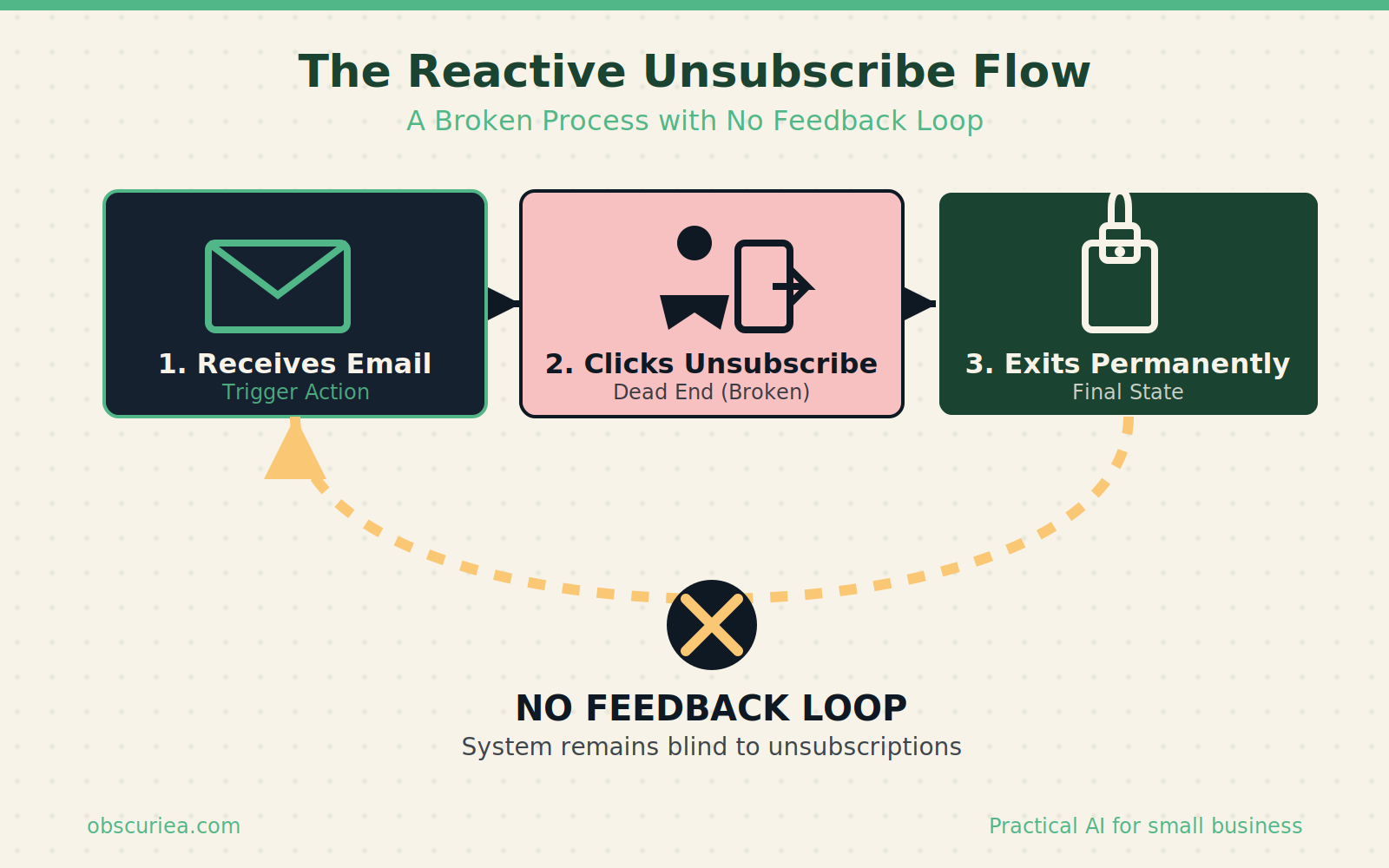
Right now, most email senders handle unsubscribes reactively. Someone clicks the link, they are gone. The only data point is the exit. But by the time a subscriber hits that button, the decision has already been made. The cost is not just a lost contact—it is the cumulative effect on sender reputation, list quality, and revenue.
A typical mid-sized e-commerce sender with 100,000 subscribers loses roughly 2–3% per month to natural churn. That is 2,400–3,600 people per year. If each subscriber was worth $5 in average lifetime value, that is $12,000–$18,000 in annual revenue walking out the door. And that does not factor in the drag on engagement metrics that compounds over time.
The root cause is not always bad content. Often it is frequency mismatch or timing. But no system currently watches for the warning signs. The unsubscribe button is the only feedback loop, and it is terminal.
The Automated Replacement
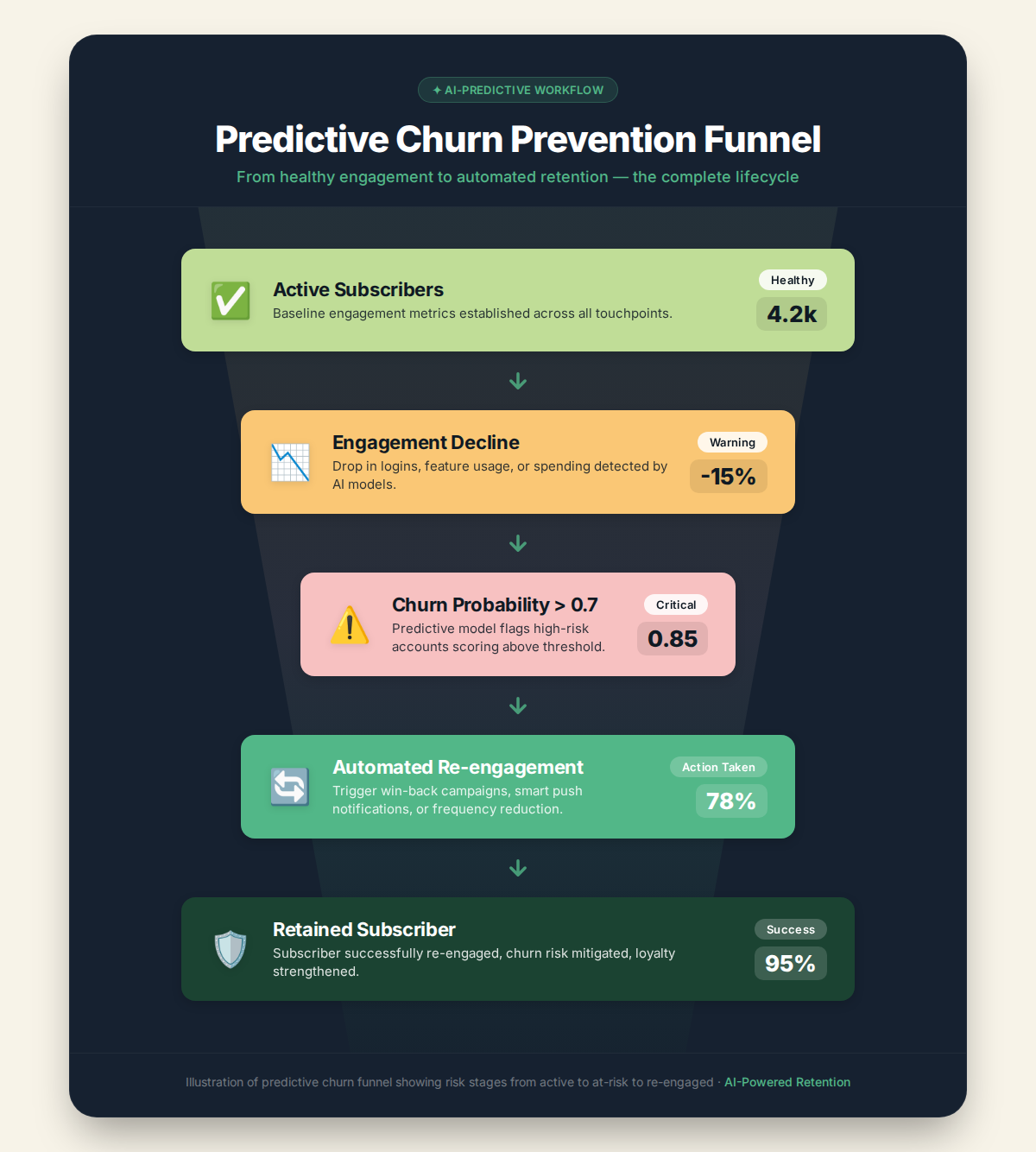
Predictive unsubscribe prevention flips the model. Instead of waiting for a click, the system monitors a set of behavioral signals that correlate with churn: declining open rates, shrinking click-through rates, increasing email deletion without reading, and time gaps between opens. These signals feed a machine learning model that assigns a churn probability score to each subscriber.
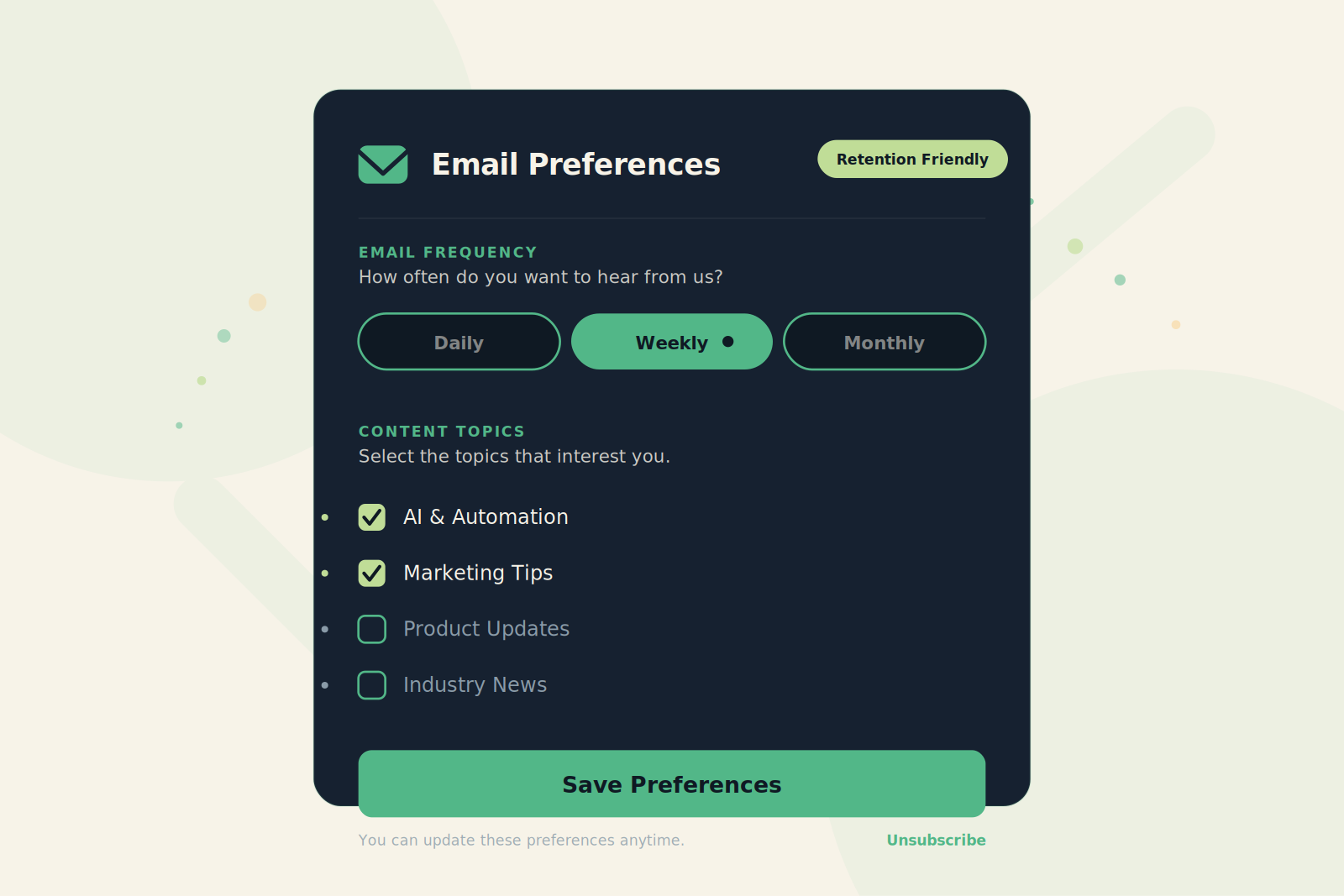
When the score crosses a threshold, the automation triggers a response without human intervention. The response can be a frequency reduction (move from daily to weekly), a content preference reset email, or a pause in sends for 30 days. The goal is to break the pattern that leads to the unsubscribe click.
The trigger is a churn probability > 0.7 based on trailing 90-day engagement. The action is an automated workflow that either offers the subscriber control via a preference center or reduces send cadence. The output is a retained subscriber who continues to engage at a lower but healthier rate.
This is not a silver bullet. The model needs data. But for senders with at least 5,000 active subscribers and six months of engagement history, it is feasible to implement with existing ESP segmentation tools and a lightweight ML layer. External link: [Mailchimp’s predictive segmentation](https://mailchimp.com/features/predictive-segmentation/).
Setup Requirements
The setup time is not trivial. Plan for 40–60 hours of engineering time if building from scratch. Alternatively, some ESPs now offer predictive churn models as native features (Mailchimp, SendGrid, HubSpot all have versions). The faster path is to enable an existing feature and tune it to your audience.
What you need:
– A clean database with at least six months of per-subscriber engagement data (opens, clicks, bounces, unsubscribes, complaints).
– A segmentation engine that can assign dynamic tags based on scoring.
– An automation platform that can trigger workflows from custom events.
– A preference center where subscribers can adjust frequency and content types.
The biggest hidden cost is data hygiene. If your list has stale records or unconfirmed opt-ins, the model will train on noise. Budget two weeks for data cleaning before any prediction work begins. External link: [SendGrid’s deliverability guide](https://sendgrid.com/blog/deliverability-best-practices/).
Failure Modes
Predictive unsubscribe prevention fails in several predictable ways.
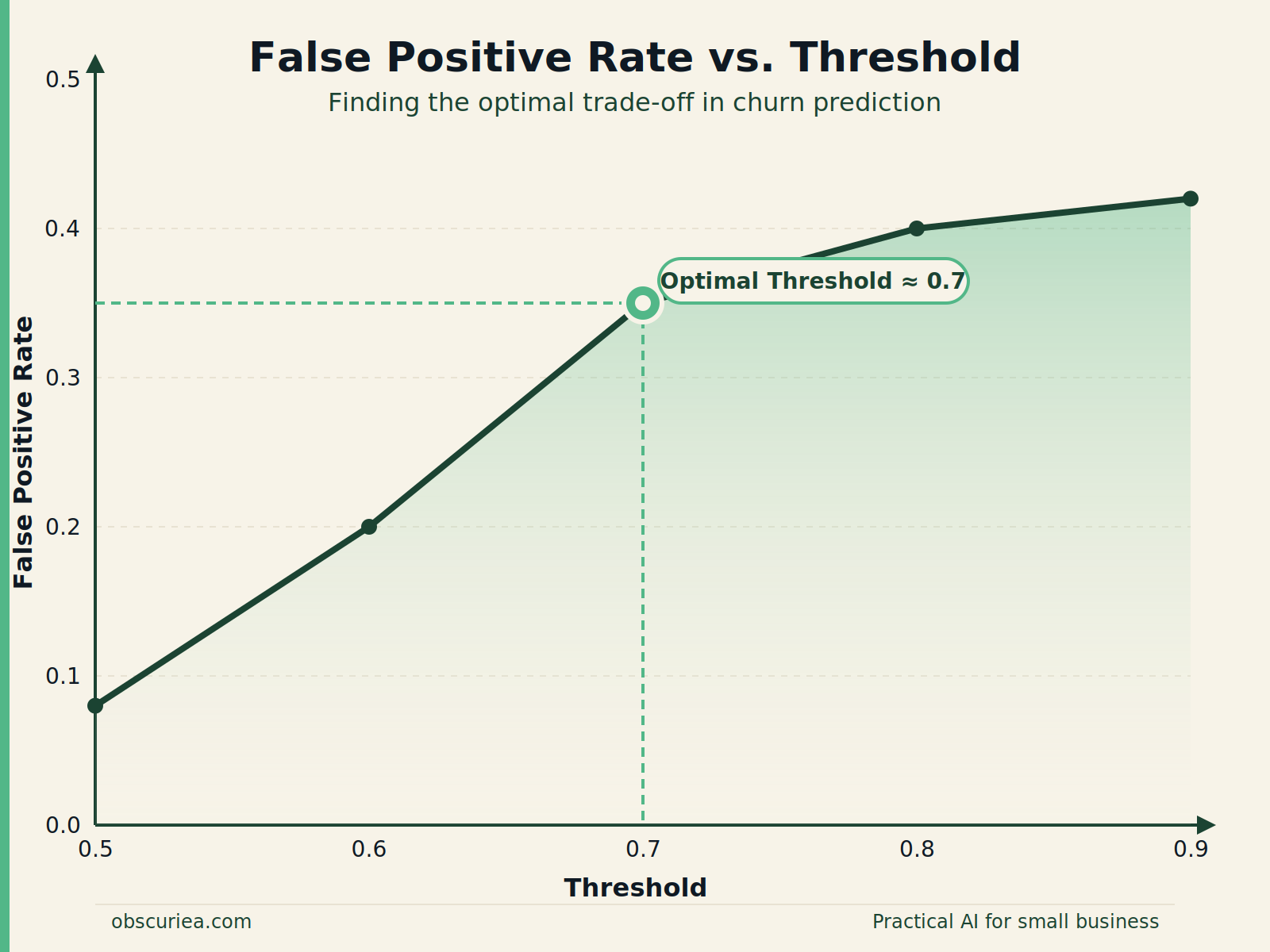
First, false positives. The model may flag a subscriber who is simply on vacation or using a different device. If you change their frequency unnecessarily, you risk annoying a good contact. The fix is to use a higher threshold and confirm with a small test before assuming churn intent.
Second, data poverty. Subscribers with sparse engagement—those who signed up but never opened—cannot be predicted accurately. The model needs signal. For these contacts, the best cure is a re-engagement campaign that asks for explicit opt-in, not a churn model.
Third, over-automation. If every detected risk triggers an email, subscribers quickly feel surveilled. The automation should fire at most once per quarter per subscriber. Batch risk scores rather than acting on every daily fluctuation.
Fourth, list inflation. The model may slow churn so effectively that dead weight stays on your list, dragging down deliverability. Pair predictive prevention with a monthly list hygiene routine that suppresses contacts with >90 days of zero engagement. External link: [HubSpot’s list cleaning tips](https://blog.hubspot.com/marketing/email-list-clean-up).
The Friction Box
- Small senders lack data volume for accurate churn models. The break-even is around a six-month history and at least 5,000 engaged subscribers.
- ESP-native predictive features vary widely in accuracy. Test against your own baseline before trusting them.
- Setup time is underestimated by most teams. The data cleaning step alone can take two weeks.
- False positives erode trust. If you shift frequency for a subscriber who is actually active, they may perceive it as a downgrade in service.
Frequently Asked Questions About Predictive Unsubscribe Prevention
What data do I need to predict unsubscribes?
You need at least six months of per-subscriber engagement data: opens, clicks, bounces, complaints, and unsubscribe history. Without volume, the model cannot find patterns.
Can I do this without machine learning expertise?
Yes. Several ESPs offer built-in predictive churn features that require no coding. Mailchimp’s Predictive Segmentation and SendGrid’s Churn Score are examples.
How do I avoid false positives?
Set a higher threshold (e.g., >0.8) and run a control test. Only apply frequency changes to subscribers who have confirmed with a second signal, like a missed send.
Will this hurt my deliverability?
Not if done correctly. Reducing sends for at-risk subscribers usually improves deliverability because engagement rates stay higher. But monitor complaint rates weekly.
How often should I train the model?
Every 30 days is sufficient for most lists. Retrain sooner if you change sending platforms or content strategy significantly.
Should I still honor the unsubscribe button?
Always. Predictive prevention is a supplement, not a replacement. Legal compliance requires an unsubscribe link, and forcing retention damages trust.
The Straight Talk
This automation is for mid-market senders who already have a solid engagement baseline and want to optimize retention without manual effort. If your list is under 1,000 contacts or your churn is already below 1% monthly, the setup cost likely outweighs the benefit.
Skip this if you are struggling with fundamentals like list hygiene or deliverability. Fix those first.
Your next move: Pull your trailing 12-month unsubscribe data. Calculate your monthly churn rate and the estimated revenue loss. If the number exceeds $5,000 annually, explore ESP-native predictive churn features. Run a 90-day pilot on a 10% segment before rolling out. Learn more about email automation strategies or see our guide on list cleaning.