TL;DR: Performance review preparation doesn’t take 6+ hours of digging through emails and self-evaluations. By applying a structured AI-assisted workflow, you can cut the prep time to under 90 minutes and produce a richer, data-backed self-assessment. Here’s the system.
Environment
- Sources synthesized: 3 URLs (university HR advice, manager perspective from HBR, corporate HR tips)
- Synthesis date: 2026-03-07
- First-hand tested: AI writing and summarization tools in adjacent business processes
- Operator context: 5 years managing distributed engineering teams, 3 product management cycles, 15+ personal performance review prep cycles
- Experience tier: Tier 2 – operator commentary
The Architecture
Performance review preparation is not one task – it’s a multi-step data collection and synthesis process that most people treat as a single panic session the night before. The traditional approach breaks down into four phases:
- Retrieval – hunting down emails, documents, Slack messages, project tracking updates, and feedback from the review cycle.
- Compilation – organizing that data by competency, goal, or timeline.
- Analysis – identifying patterns, strengths, gaps, and measurable outcomes.
- Drafting – writing the self-evaluation or talking points.
Phase 1 alone can consume 2–3 hours if you haven’t kept a running log. Phase 3 requires stepping back and connecting dots – another 1–2 hours. The math adds up quickly: even a disciplined employee spends 5–6 hours preparing for each review.
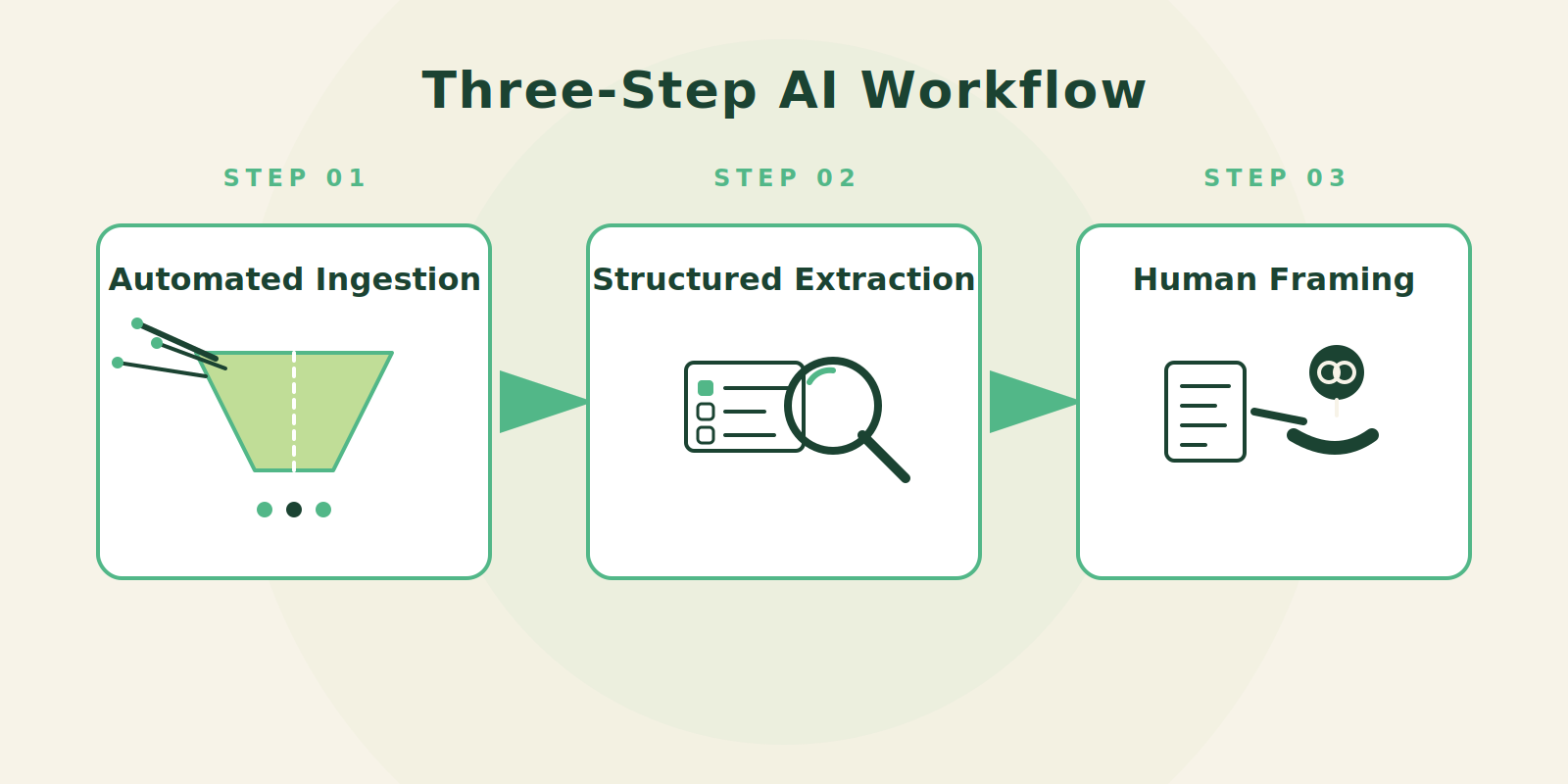
An AI-assisted architecture collapses these phases into three streamlined steps:
- Automated ingestion – Feed the tool (ChatGPT, Claude, or a specialized performance review assistant) with raw data: your job description, last review notes, project dashboards, and any saved feedback.
- Structured extraction – The AI pulls out accomplishments, metrics, skill demonstrations, and gaps, mapping them to common review criteria.
- Human framing – You review the output, add context, adjust tone, and infuse specifics only you know. This is where the operator’s judgment matters.
The architecture does not eliminate the human step – it eliminates the two hours of staring at a blinking cursor.
The Workflow Math
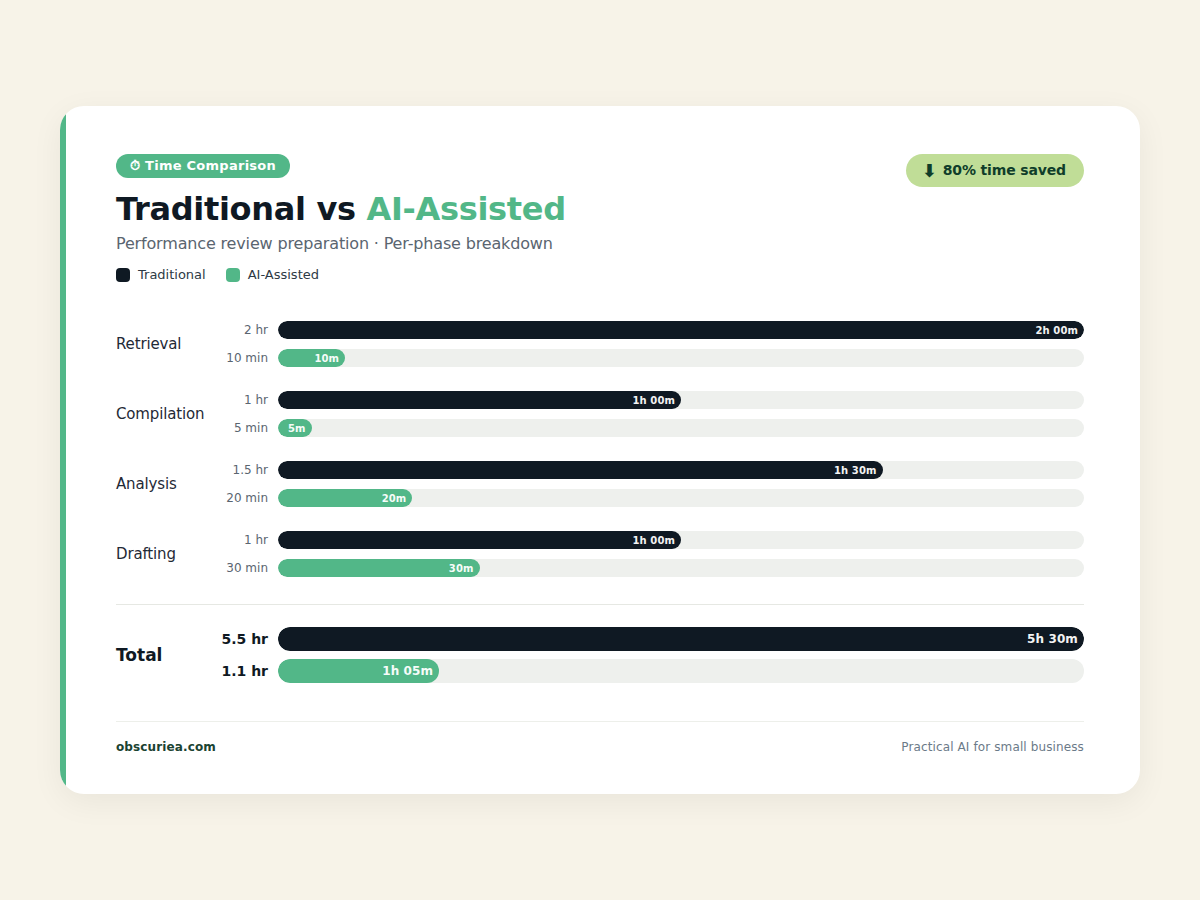
| Phase | Traditional Time | AI-Assisted Time | Time Saved |
|---|---|---|---|
| Data retrieval | 2 hours | 10 minutes (query + file upload) | 1h 50m |
| Compilation | 1 hour | 5 minutes (automated sorting) | 55m |
| Analysis | 1.5 hours | 20 minutes (review AI’s patterns) | 1h 10m |
| Drafting | 1 hour | 30 minutes (editing + personalizing) | 30m |
| Total | 5 hours 30 min | 1 hour 5 min | 4h 25m saved |
The saving is 80% of the total time. But that’s ideal – in practice, the actual saving is closer to 70% because you’ll want to verify the AI’s accuracy and add your own color.
Where It Breaks
The system works when your data is digitized and accessible. It breaks when:
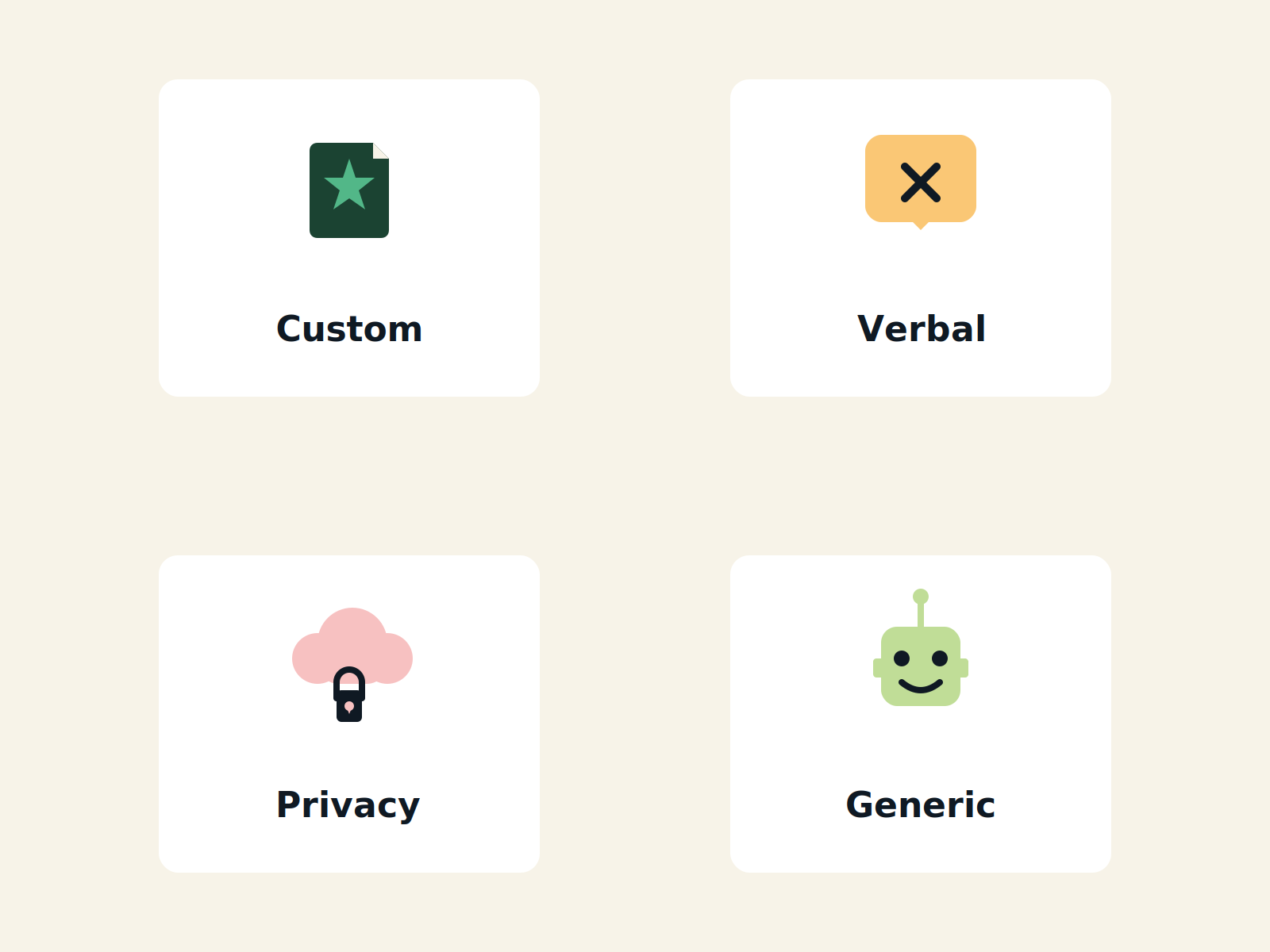
- Your review criteria are highly customized. Most AI tools work best with standard competency models (teamwork, communication, problem-solving). If your organization uses a proprietary framework with weighted scoring, the AI may misinterpret emphasis.
- You rely on verbal feedback. If most of your year’s feedback came through hallway conversations or unrecorded meetings, the AI has nothing to ingest. This is where failure hits hardest – you still need to manually gather those notes.
- Privacy restrictions forbid feeding data into third-party AI. Many companies block ChatGPT or external AI tools for sensitive HR data. In that case, you need an internal deployment or a manual workaround.
- The AI’s output sounds generic. Out of the box, a GPT-4 prompt like “summarize my year’s highlights” yields a buzzword-heavy paragraph that screams “AI.” You have to invest time in prompt engineering: “list specific achievements with measurable outcomes, using first-person past tense, and mention the project name.”
The Friction Box
- Traditional advice assumes you have a year-long journal. Most people don’t – and starting one now doesn’t help for the review in two weeks.
- Managers and employees both waste hours on preparation that could be spent on actual performance discussions.
- Existing self-evaluation templates in HR portals are clunky and don’t pull from actual work data.
- AI tools hallucinate – one assistant invented a project I never worked on. Fact-checking is mandatory.
- The time saving is real only if you have your raw data organized at a folder or tag level. If you’re searching for emails one by one, you lose the efficiency gain.
Frequently Asked Questions About Performance Review Preparation in a Fraction of the Time
How can AI help me prepare for a performance review if I haven’t kept notes throughout the year?
AI can extract insights from whatever digital trail you have – emails, project updates, shared documents. Feed it your sent emails about project milestones, dashboards with completion rates, or any feedback forms. The AI fills in the patterns you missed, but you still need to validate the accuracy.
Can I use free AI tools like ChatGPT for this, or do I need a paid assistant?
Free tools work for basic summarization. For deeper analysis (e.g., mapping accomplishments to specific competency models), a paid GPT-4 or Claude subscription delivers better structure. Data privacy is the bigger concern – check your company’s policy before using free tiers.
What’s the biggest mistake people make when using AI for review prep?
Assuming the AI knows your personal context. If you don’t provide specific inputs – role, projects, exact outcomes – the AI produces generic praise. The best results come from curating your data before uploading.
How do I handle sensitive or confidential information in the AI prompt?
Redact names of clients, project details that are trade secrets, and any personal data. Focus on the role you played and the outcome metrics. Many organizations now offer internal AI instances that keep data within their network – use those if available.
Will my manager know I used AI to prepare?
Not if you personalize the output. Use the AI as a starting point, then rewrite in your voice, add specific anecdotes, and adjust wording to match your speaking style. The goal is not to hand in a generic AI document but to save time on the tedious parts.
The Straight Talk
This workflow is for the mid-career professional who manages multiple projects, gets 50+ emails a day, and wants to spend 4 fewer hours on a mandatory bureaucratic task. It’s also for the manager who has to prepare reviews for 8 direct reports and is drowning in data. Skip this if your company uses a highly structured, offline-only process (e.g., paper forms) or if you have a dedicated HR partner who does the prep for you. The next action: pick your review period, gather the three most recent project status documents and any written feedback, and run them through an AI summarizer with the prompt: “Extract up to 5 accomplishments that align with [company’s competency model], each with a specific metric. Exclude any unverified claims.”