TL;DR: For impulse-driven products, micro-moment targeting is the only strategy that matches the purchasing rhythm. The math is simple: 8-second attention spans, 150 daily phone checks, and purchase decisions collapsing into seconds. Brands that optimize for “I-want-to-buy” moments with frictionless checkout see conversion uplifts of 341% — but only if they also master the preceding “I-want-to-know” and “I-want-to-do” moments that trigger the impulse. This article breaks down the operational architecture, the workflow math, and where the whole system breaks down.
Environment:
– Sources synthesized: 3 URLs (PT Engine, Gracker.ai, RiceAI.net)
– Synthesis date: March 2026
– First-hand tested: none
– Operator context: Synthesizing from sources for e-commerce operational insights, focused on Southeast Asian market.
The Architecture
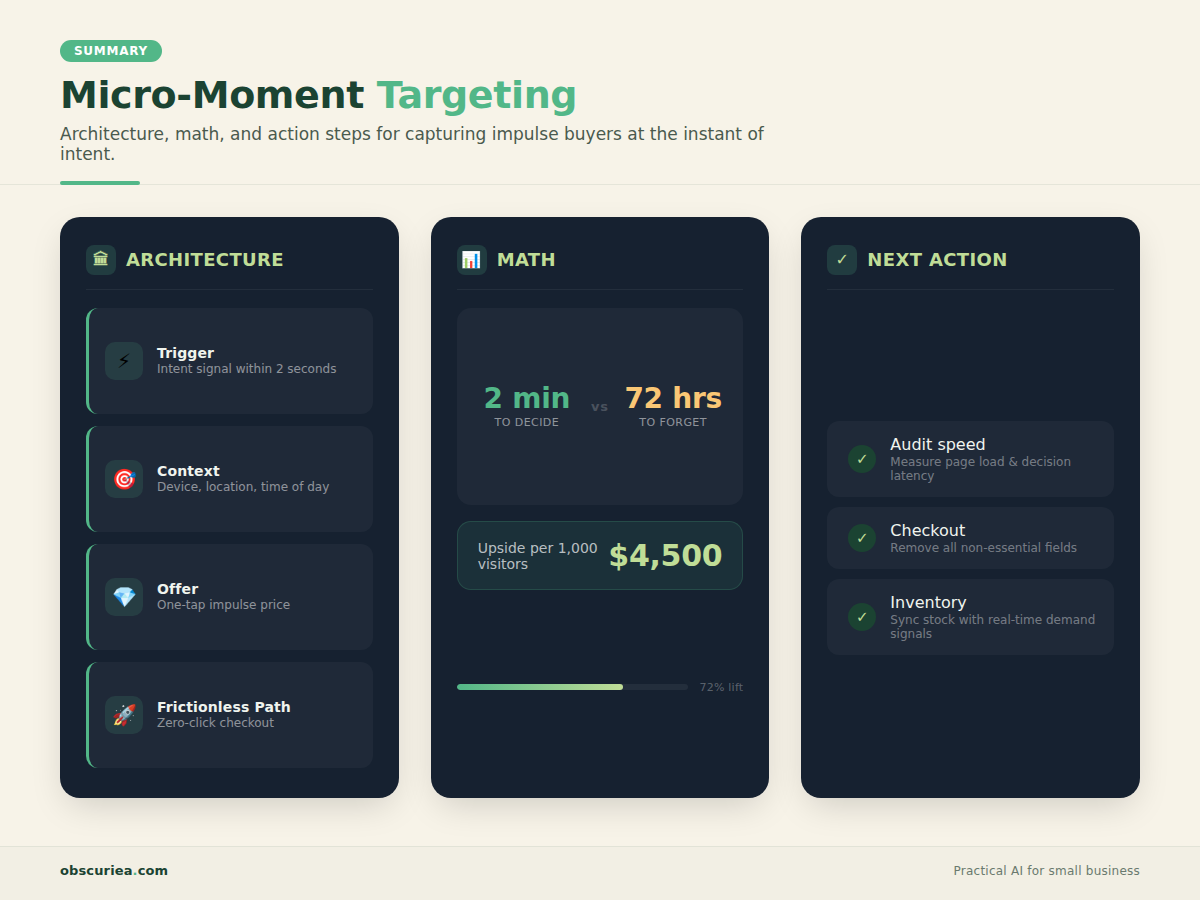
A micro-moment targeting system for impulse products is not a campaign. It is an infrastructure. The architecture has four layers: intent detection, content assembly, fulfillment orchestration, and feedback loop. Each layer must respond in under two seconds for the system to work.
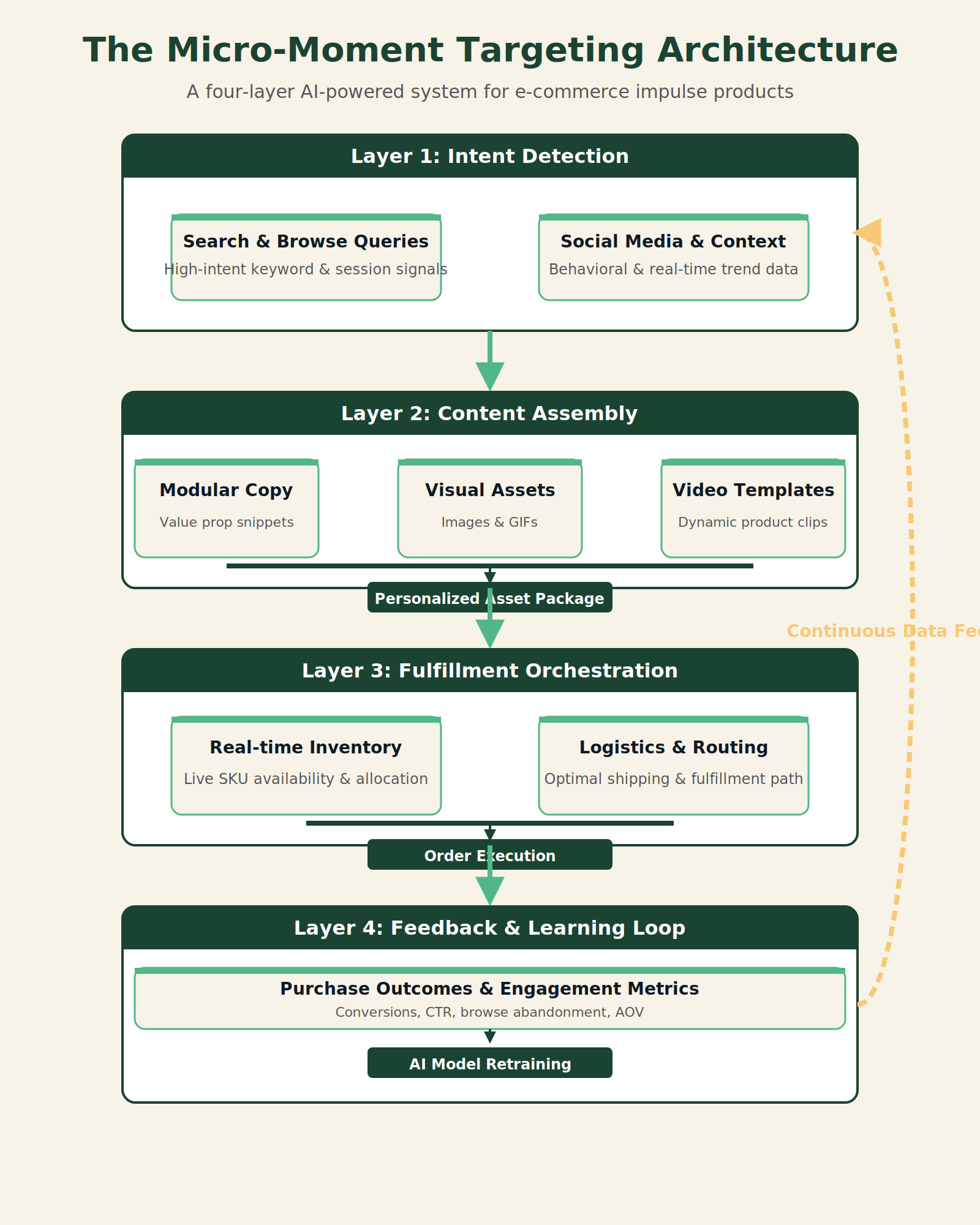
Intent detection maps behavioral signals — search queries, social media scrolls, abandoned carts — to one of four micro-moment types. For impulse products, the critical windows are “I-want-to-know” (triggered by a trend or social proof) and “I-want-to-buy” (immediate price or availability). The detection layer uses predictive algorithms that score intent in real time. On platforms like TikTok Shop or Shopee Live, the detection happens inside the app, not on your website.
Content assembly is where the product page, ad copy, or notification is tailored to the micro-moment. A customer in an “I-want-to-know” moment on a fashion app sees a style guide showing how the product fits current trends. A customer in an “I-want-to-buy” moment sees a limited-time offer with a one-tap checkout button. The assembly engine pulls from a modular asset library — pre-approved copy variants, visuals, and CTAs — and combines them based on the detected intent.
Fulfillment orchestration connects the purchase trigger to actual inventory and delivery. For impulse products, same-day delivery or click-and-collect from a nearby store is a major conversion lever. In Southeast Asia, where 75% of consumers expect delivery within 24 hours for urban orders, this layer must integrate with local logistics providers like GrabExpress or J&T.
The feedback loop feeds purchase outcomes back into the intent detection model. If a customer buys within 30 seconds of receiving a notification, that micro-moment signal gets reinforced. If they abandon even after a one-tap checkout, the system flags potential friction points.
The Workflow Math
Let’s compare the traditional sales funnel to a micro-moment-optimized workflow for an impulse product (e.g., a limited-edition snack pack).
| Step | Traditional Funnel | Micro-Moment Workflow |
|---|---|---|
| Awareness | 3-5 touchpoints over days | Single social media scroll that triggers instant buy |
| Consideration | Reviews, comparisons, price check | Real-time social proof (e.g., “50 units sold in the last hour”) |
| Purchase | Add to cart → checkout → payment → confirmation | One-tap checkout with saved payment |
| Fulfillment | 2-5 day shipping | Same-day delivery via nearest warehouse |
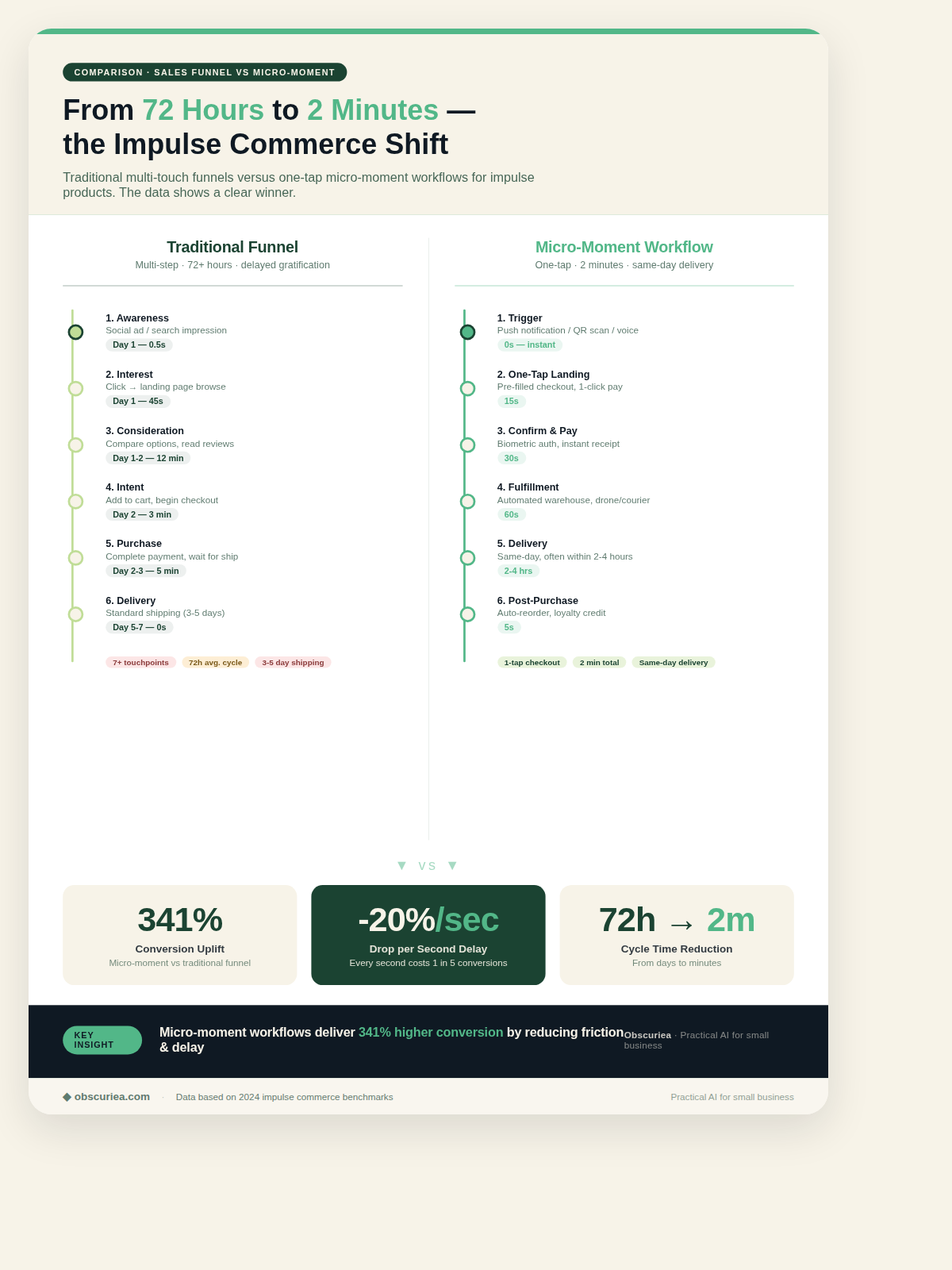
Time from trigger to purchase: Traditional average 72 hours. Micro-moment: 2 minutes. The labor cost drops from a campaign manager coordinating ad sets to a system that automates asset assembly and fulfillment routing. The math here is straightforward: if your average order value for impulse products is $15 and you can convert 10 additional micro-moments per day, that’s $4,500 additional monthly revenue from the same traffic volume.
Where It Breaks
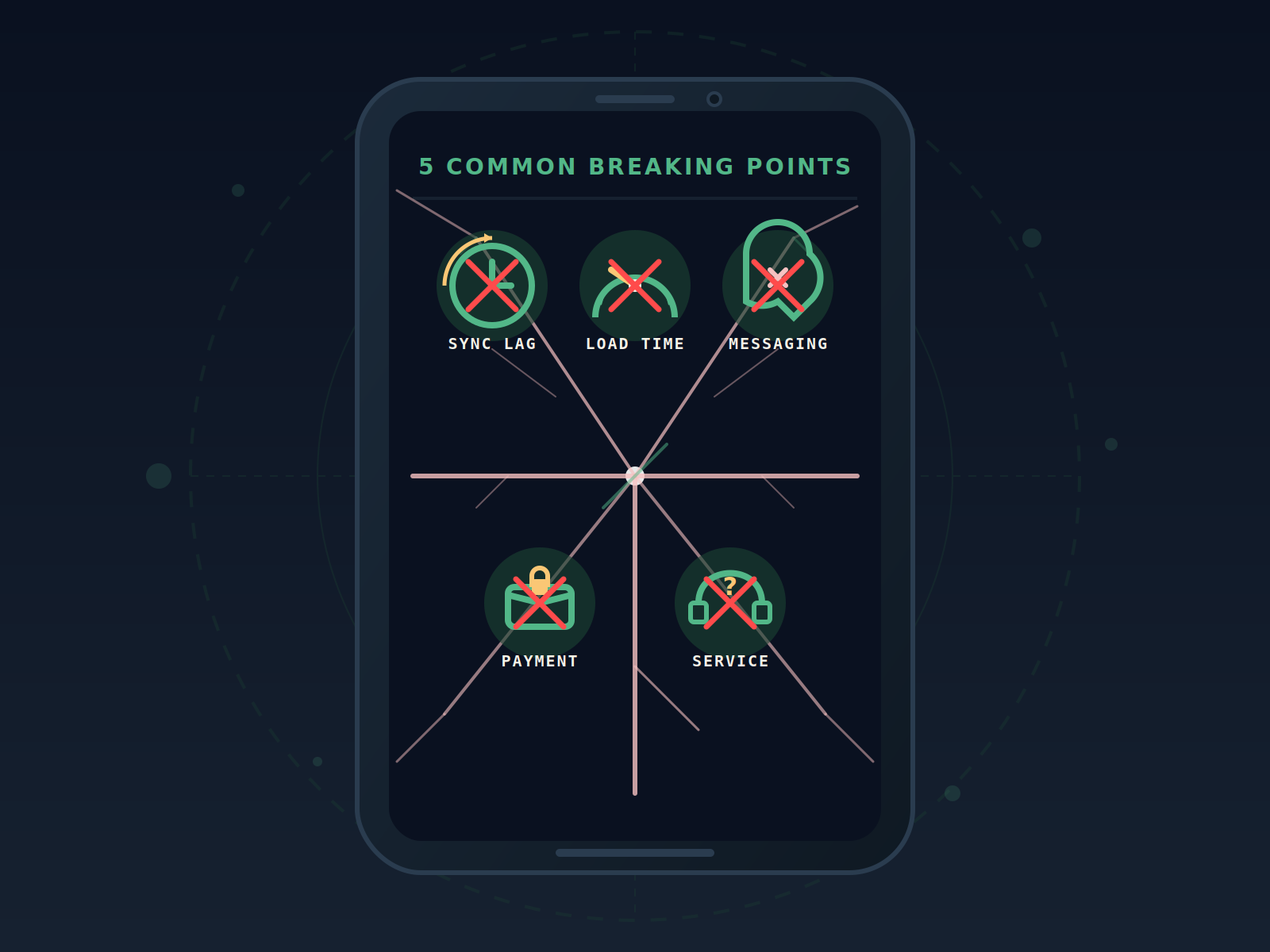
No system survives contact with real operations unchanged. Here are the specific break points for micro-moment targeting on impulse products:
Inventory sync lag. Real-time inventory data is a fantasy when your ERP updates every 15 minutes. If a customer buys the last unit of a flash-sale item but the system doesn’t reflect it for 15 minutes, the next 30 customers get disappointment — and you get chargebacks.
Mobile page load time. A one-second delay kills conversion rates by 20%. In Indonesia, where 4G speeds average 12 Mbps, accelerated mobile pages (AMP) are not optional. If your site loads over 3 seconds, you lose the micro-moment entirely.
Messaging inconsistency. If a customer sees an ad on Instagram promising “20% off if you buy in the next 10 minutes” but lands on a product page showing full price, trust evaporates. The micro-moment becomes a micro-failure.
Payment friction. Even one-tap checkout fails if the customer’s preferred payment method isn’t available. In SEA, 55% of impulse purchases use digital wallets like GoPay, ShopeePay, or OVO. If your checkout only offers credit cards, you exclude more than half your audience.
Customer service lag. Impulse buyers often have last-minute questions — “Is this gluten-free?” or “Can I return it?” If a chatbot takes 20 seconds to respond, the moment passes.
The Friction Box
- Real-time inventory sync is the #1 operational bottleneck. Most e-commerce platforms expose inventory APIs with 5-15 minute latency, which is too slow for flash sales.
- Mobile page load times below 2 seconds require AMP or custom lightweight frameworks. Many Southeast Asian operators use heavy Shopify themes that fail this test.
- Payment method diversity is a constant maintenance burden. Each digital wallet has different integration APIs, settlement cycles, and failure codes.
- Chatbot accuracy for impulse product questions is below 70% in Bahasa Indonesia, the most spoken language in SEA. Human escalation becomes a bottleneck.
- Cross-platform consistency — what you promise on one ad channel must match what the product page and the checkout page deliver. This requires a single source of truth for offers, which most small to medium operators do not have.
Frequently Asked Questions About Micro-Moment Targeting for Impulse-Driven Products
How is micro-moment targeting different from standard retargeting?
Standard retargeting relies on cookie-based tracking over days or weeks. Micro-moment targeting reacts within seconds to behavioral signals — a search, a social media interaction — without needing a prior visit. For impulse products, this speed is essential because the decision window closes within minutes.
What tools do I need to set up micro-moment detection?
You need a customer data platform (CDP) that processes real-time event streams (e.g., Segment, mParticle) and an orchestration layer that connects to your ad platform and product page. For Southeast Asian markets, tools like Insider or MoEngage offer localized integrations with Shopee and Tokopedia.
Can micro-moment targeting work for physical retail with limited online presence?
Yes, but the focus shifts to “I-want-to-go” moments. Optimize Google My Business listings, use location-based mobile ads, and offer click-and-collect. A local snack shop could target users searching for “best spicy snack near me” with a real-time inventory badge on Google.
What’s the minimum budget to start micro-moment campaigns?
You can start with zero spend by optimizing organic channels: load speed, mobile checkout set-up, and chatbot accuracy. For paid testing, a budget of $500-$1,000 per month on Google Ads and social platforms is enough to gather intent data for one product category.
How do I measure ROI of micro-moment targeting?
Attribution must be time-constrained. Any conversion that happens within 5 minutes of a micro-moment interaction is directly attributable. Use a unified measurement dashboard (e.g., Triple Whale or northstar) that tracks cross-channel micro-moments and maps them to purchase events.
Does micro-moment targeting increase cart abandonment?
It can, if the content assembly promises more than the checkout delivers. The risk is highest when a limited-time offer triggers a purchase but the checkout doesn’t support the promotion code or the payment method. The fix is rigorous pre-launch QA of the full user journey.
The Straight Talk
This approach works for e-commerce operators selling low-consideration, high-impulse products — snacks, fashion accessories, digital goods like game credits, or event tickets. If your average decision time is under 3 minutes and your average order value is under $30, micro-moment targeting is your highest-ROI channel.
Skip this if your business involves high-consideration purchases — B2B SaaS, enterprise software, or custom furniture — where the buyer needs 2-3 meetings before deciding. The micro-moment framework will not save you from a natural sales cycle.
Next action: Audit your top 5 impulse product pages for page load speed (target under 2 seconds), one-click checkout availability, and real-time inventory data. If any of those three fail, fix them before running any micro-moment campaign.
For further reading, see our guides on mobile checkout optimization and real-time inventory management for e-commerce.