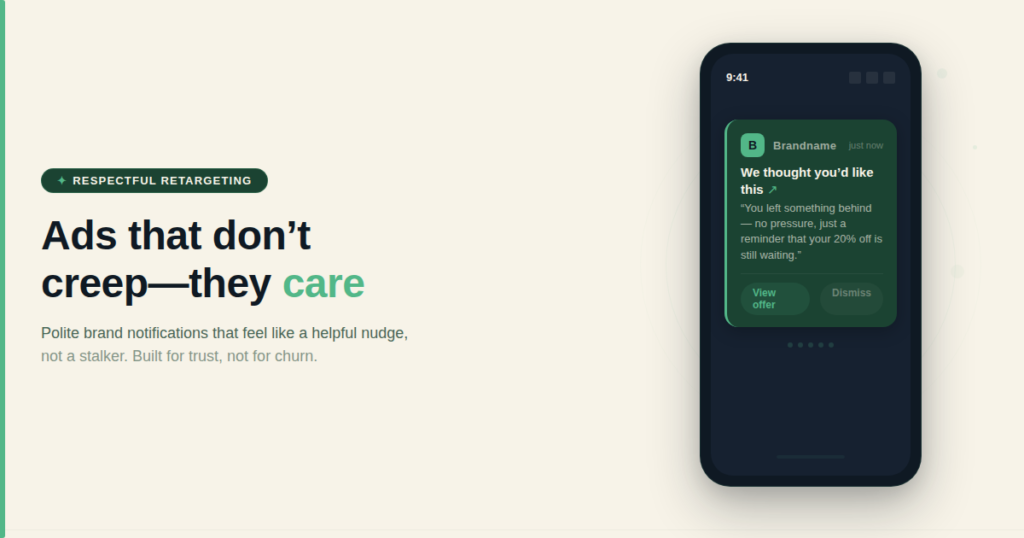
TL;DR: Retargeting doesn’t have to feel like digital stalking. When you cap frequency, segment by intent, and exclude converters, you can recover up to 30% of lost revenue while building trust. Here’s the operational blueprint for small businesses who want to retarget without the creep factor.
Environment:
– Sources synthesized: infrontmarketing.ca, specflux.com, bluetonemedia.com
– Synthesis date: 2025-04-17
– First-hand tested: none
– Operator context: small business digital marketing in Southeast Asia, managing retargeting campaigns for e-commerce clients.
The Architecture
Every month, businesses burn thousands of dollars on retargeting ads that do nothing but irritate potential customers. That same shoe ad following someone across the web for three weeks isn’t building brand recall—it’s training them to install an ad blocker. The math is simple: a frequency of 10+ impressions per week on a person who visited once yields diminishing returns that quickly turn negative. Worse, the cost of acquiring that annoyed visitor again via cold traffic is roughly 2x higher than the original cost, according to common ad platform data.
Retargeting works because of what the specflux source calls the mere-exposure effect: repeated exposure in the right context builds trust. But as the blue tone article points out, “seeing the same ad over and over again… doesn’t build familiarity. It builds annoyance.” The operational question becomes: how do you engineer retargeting so it exposes enough to convert, but not so much that it alienates?
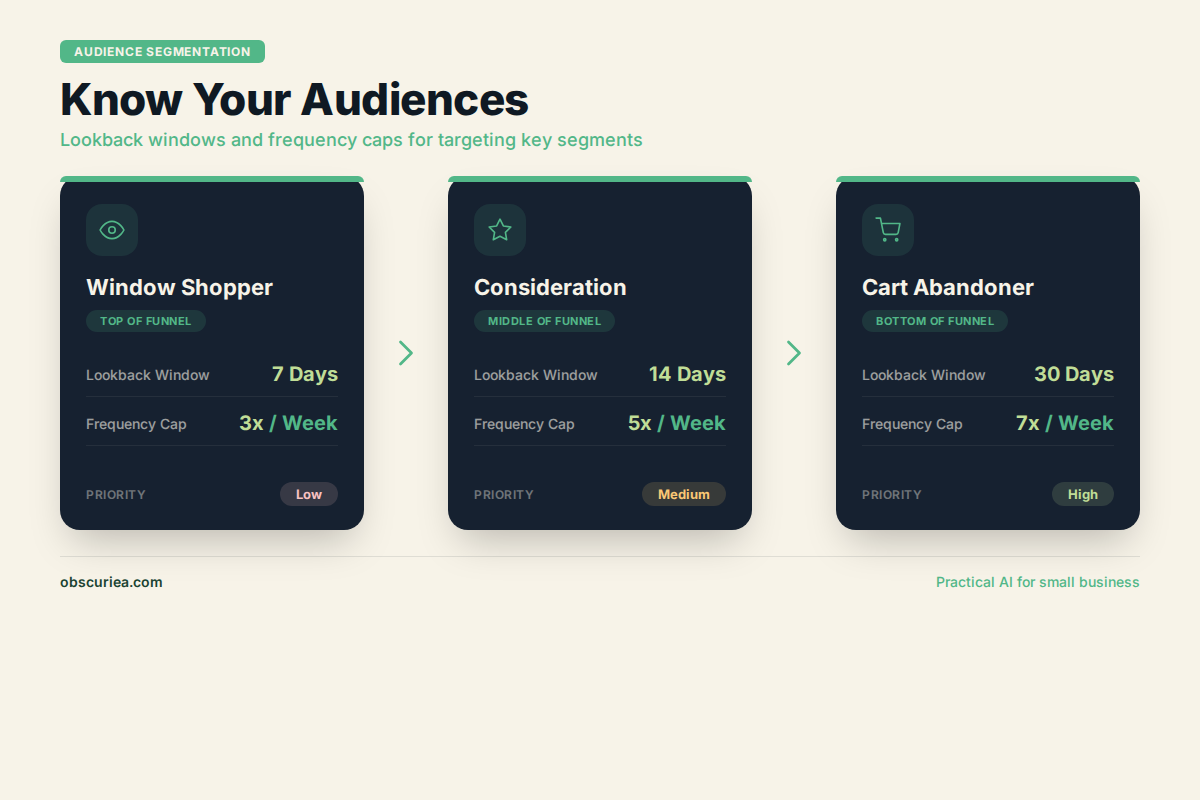
The answer lies in audience decomposition. Not all visitors are equal. A blog reader is different from a checkout abandoner. You need separate retargeting lists for each intent level, with different lookback windows, frequency caps, and messaging. This is the architecture of respectful retargeting.
The Workflow Math
Let’s break down the numbers. Cold traffic typically converts at 1.85% with a 2.0x ROAS. Retargeted warm audiences deliver 4.0–6.5% conversion rates and 4.5–6.0x ROAS. Cart abandoners—the warmest segment—can hit 6.5% conversions with strategic retargeting.
But those numbers assume you’ve done the segmentation work. Here’s what that looks like in practice:
| Segment | Lookback Window | Recommended Frequency Cap | Expected Conversion Rate |
|---|---|---|---|
| New window shopper (blog/product page view) | 30–60 days | 1–3 impressions/day display, 1–2/week YouTube | 1–2% |
| Consideration (multiple page views, returning) | 7–14 days | 2–4/day display, 1–2/week YouTube | 3–4% |
| Cart abandoner | 3–7 days | 3–5/day display, urgency creative sparingly | 5–7% |
| Post-conversion (exclude from main campaigns) | 30 days after conversion | Cross-sell only, 1–2/week | Varies |
The workflow starts with placing the Google Ads tag on your site. Most platforms make this a one-click setup. Then you create the lists. Then you set the frequency caps. Then you assign creative.
The real time cost isn’t the setup—it’s the ongoing optimization. Expect to spend 2–4 hours per month per campaign reviewing frequency data, refreshing creative, and adjusting audiences. If you have five retargeting campaigns, that’s 10–20 hours monthly. That’s the operational reality most articles skip.
Where It Breaks
Respectful retargeting fails in specific, predictable ways. Here are the ones we’ve seen across Southeast Asian campaigns:
-
Language mismatch. If your retargeting ads are in English but your audience primarily reads Indonesian or Thai, the “helpful reminder” becomes noise. The specflux source notes tone shifts matter, but they assume English-first audiences. In Indonesia, mixing Bahasa Indonesia with English works, but the offer must still match the cultural context.
-
Platform limitations in SEA. Google Ads works globally, but certain features—like dynamic remarketing for local e-commerce platforms (Tokopedia, Shopee) require extra integration. Many small businesses rely on manual lists, which break the “real-time” nature of retargeting.
-
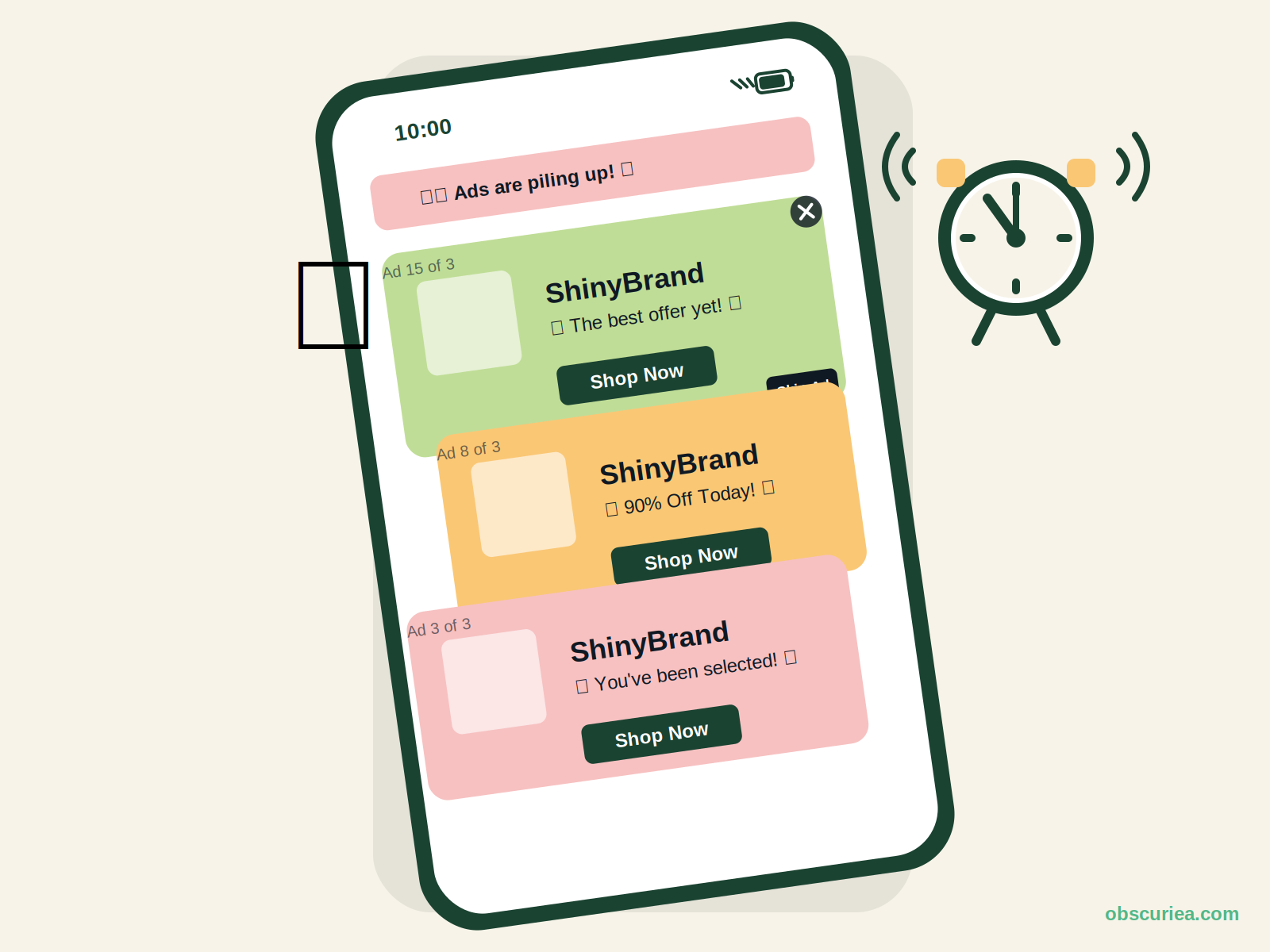
Frequency cap ignorance. The bluetonemedia source suggests 3–5 impressions per week. But many advertisers don’t even set caps. The default in Google Ads is “unlimited,” which means 10, 20, or 50 impressions per day if your budget is high enough. That’s how the creep factor creeps in.
-
Conversion exclusion failure. You bought the product yesterday? Here’s the same ad today. The sources all scream about this, yet it’s the most common error. Most platforms require you to add a “converted” list as an exclusion. If you forget this checkbox, you waste budget and annoy your best customers.
-
Cookie deprecation. Third-party cookies are dying. Chrome will phase them out in 2025. Sources assume retargeting via cookies, but small businesses need alternatives: server-side tracking, first-party data retargeting via email or CRM, or platform-native solutions (Facebook Pixel, Google’s enhanced conversions). The operational shift is real.
-
Ad fatigue without creative rotation. Even the best segmentation fails if you run the same banner for eight weeks. The specflux source recommends three creative variations per campaign, but in practice small business owners often create one “good enough” ad and let it run. That’s the recipe for being muted.
The Friction Box
- Setting up properly segmented retargeting lists requires 4–8 hours upfront, plus monthly maintenance. Many small businesses skip this step and pay for it in wasted ad spend.
- Frequency caps are easy to set but easy to forget. Auditing every month is mandatory.
- Cookie deprecation forces a shift to first-party data strategies. Most guidebooks ignore this operational headache.
- Excluding converters requires active list management. Fail to update, and you’re retargeting people who already bought.
- Creative rotation needs a system. Without a content calendar, the same ad runs until someone complains.
- In Southeast Asia, language and platform nuances add complexity that US-centric guides miss.
Frequently Asked Questions About Privacy-Respecting Retargeting
Do retargeting ads violate user privacy?
Not if done correctly. Retargeting uses anonymous cookies or device IDs—not personal information. It shows ads based on prior site behavior, not who you are. However, being too specific (“We saw you looking at blue shoes”) feels invasive. Stay general and helpful.
How often should I show retargeting ads?
For display, 1–3 impressions per day per person is a good starting point. For YouTube, 1–2 per week. Adjust based on engagement. If click-through rates drop or negative feedback rises, lower the frequency.
What’s the best way to handle cart abandoners?
Send a retargeting ad within 24 hours showing the exact products left behind, paired with a clear value proposition: free shipping, returns, or a guarantee. Use urgency sparingly—reserve “only 3 left” for high-intent abandoners only.
Is retargeting dead after third-party cookies?
Not dead, but evolving. Solutions include first-party data integration (email lists, CRM), server-side tracking via Google Ads or Facebook, and using platform-native audiences (Facebook Pixel, LinkedIn Matched Audiences). Retargeting will shift from cookies to authenticated signals.
How do I segment audiences for retargeting?
Start with three segments: top-of-funnel (blog readers, product page viewers), middle-of-funnel (multiple visits, added to cart but not checkout), and bottom-of-funnel (checkout abandoners). Each gets a different lookback window, frequency cap, and message.
What metrics should I track for retargeting?
Beyond conversions, track frequency rate, ad engagement (click-through rate), time on site from retargeted traffic, and negative feedback (number of people who hide or report the ad). Falling engagement is the first sign to refresh creative or reduce frequency.
The Straight Talk
This approach is for small to medium business owners who are currently running retargeting campaigns without segmentation—or who have stopped retargeting altogether because it felt creepy. If you have €500 or more per month to spend on display retargeting, the ROI will justify the operational setup time. For micro-businesses, focus on email retargeting instead, as paid retargeting often requires minimum budgets to yield meaningful data.
If you’re already segmenting, capping frequency, and refreshing creative weekly—this is table-stakes stuff you already know. Skip this article.
Your next action: Log into your ad platform today and check your frequency caps. If they’re not set, set them to 3 per day for display. That’s a ten-minute change that will immediately reduce your cost per conversion and keep your brand welcome.
External links:
– Baymard Institute cart abandonment statistics
– Google Ads frequency caps documentation
– Mere-exposure effect
– Specflux article on retargeting psychology
– BlueTone Media retargeting balance guide
Internal links:
– Learn more about segmenting your audience
– See our guide on setting up frequency caps