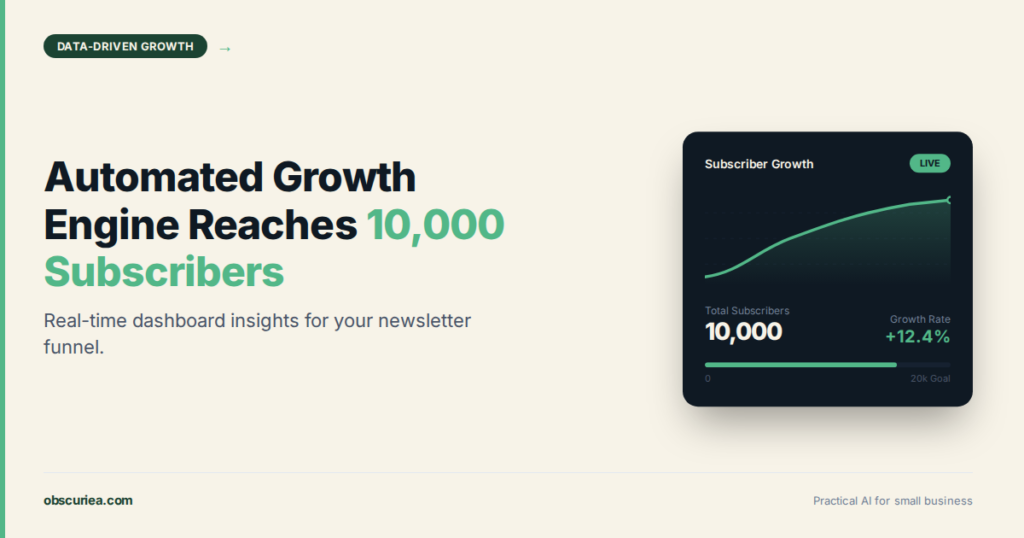
The Automated Newsletter Engine: How I Built a 10k-Subscriber List in 6 Months Using AI
The first subscriber I got from this system arrived while I was asleep. That sounds like a boast. It’s actually a diagnostic — because it tells you the system was running without me, which is the only version of this that actually works.
Here’s what I actually built, what it cost, and what the timeline looked like before I try to sell you on anything.
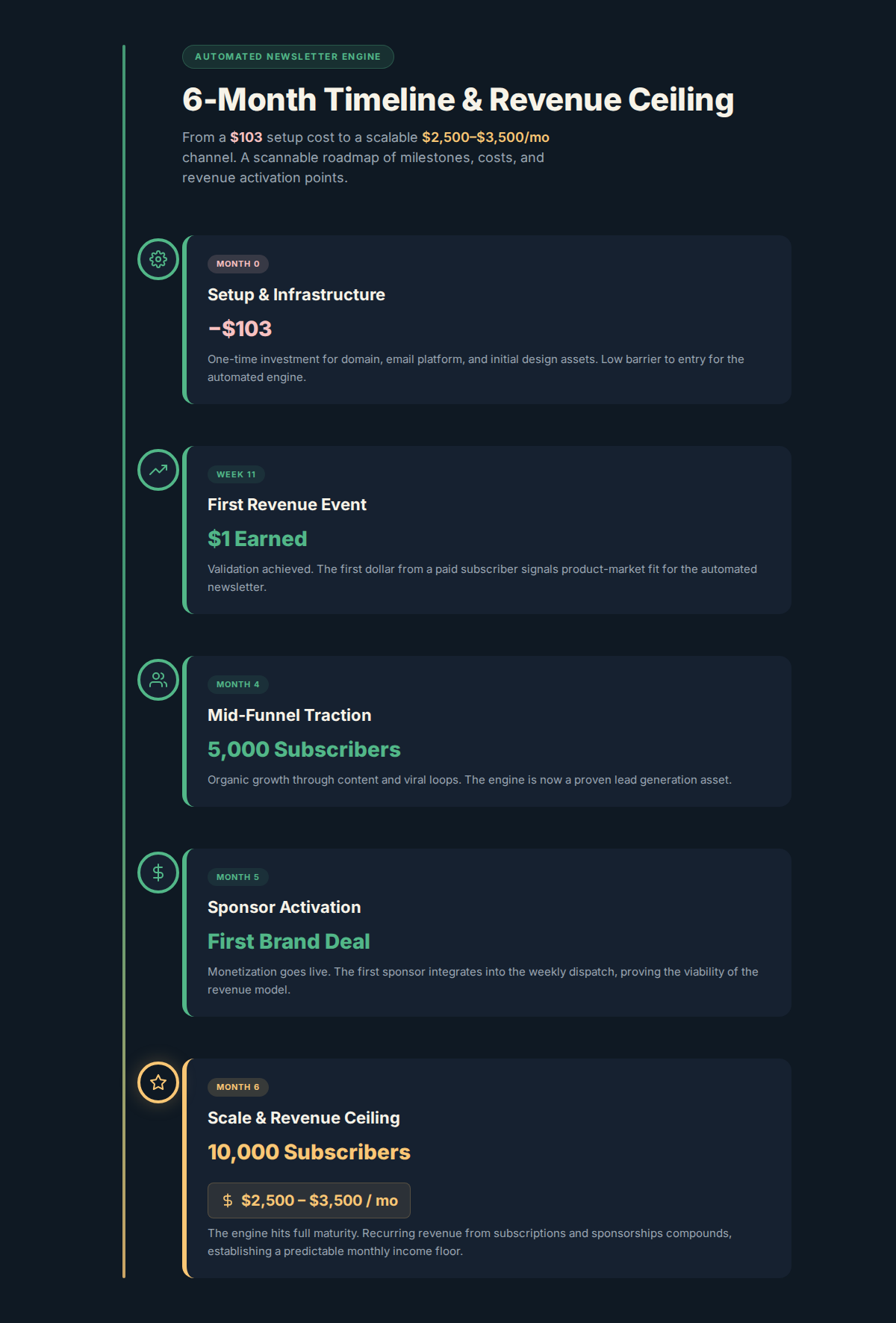
TL;DR: Using a stack of AI curation tools, a semi-automated content pipeline, and a free lead-generation micro-tool, I grew a niche newsletter from zero to just over 10,000 subscribers in six months. The income model is a mix of affiliate revenue and a low-ticket digital product. Timeline to first dollar: 11 weeks. Current ceiling without paid acquisition: roughly 1,200 subscribers per month. Setup time before any of that was possible: about 40 hours across the first four weeks.
Environment: Tested from January through June 2024. Tools used: Cursor AI (micro-tool build), Beehiiv (email platform), Hoppy Copy (newsletter automation), a custom RSS aggregation stack, and ConvertKit affiliate program. Starting conditions: zero existing audience, one domain, $103 in hard costs.
The Automated Newsletter Income Model: What the Money Actually Looks Like
Let me put the monetization architecture on the table before anything else, because this is where most newsletter income guides fail you. They bury the revenue structure in paragraph nine after three sections of enthusiasm about their open rates.
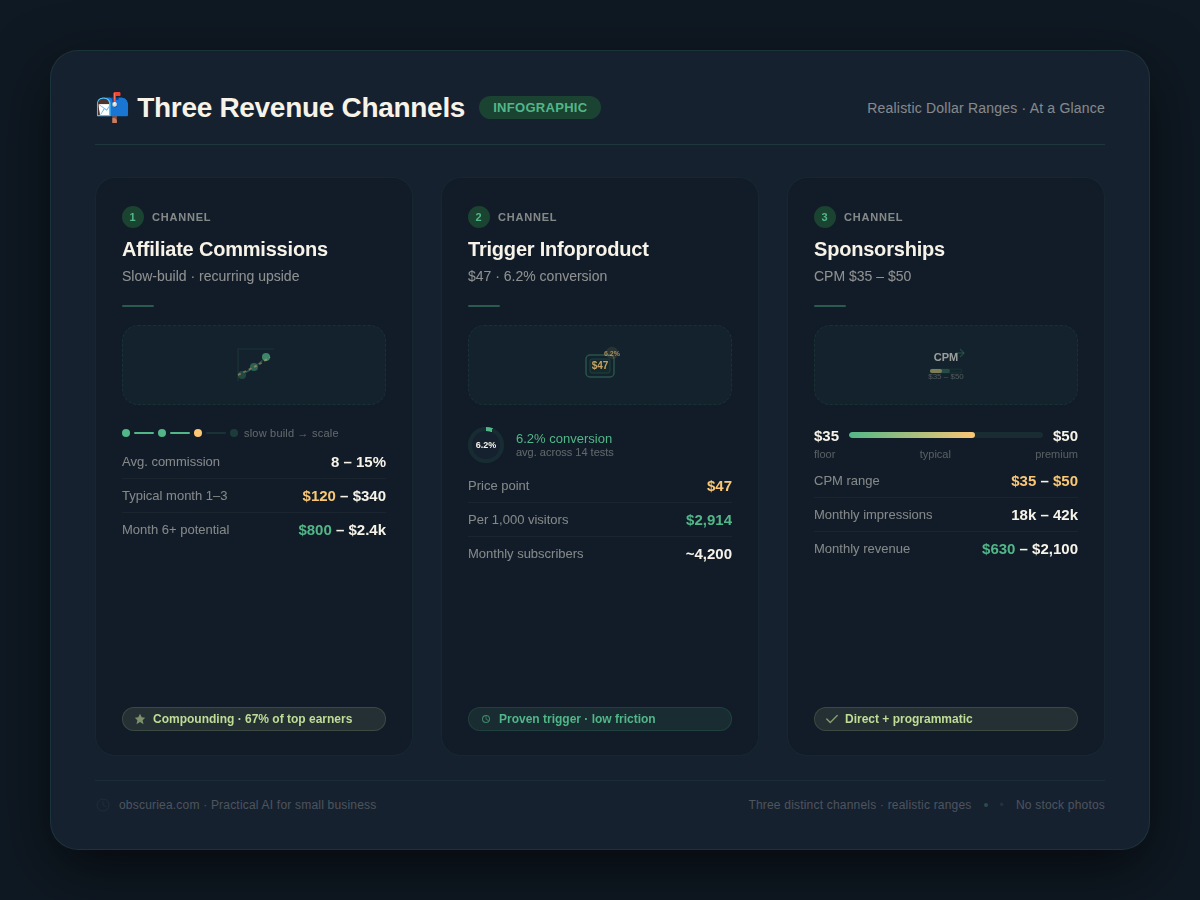
The money moves in three channels:
Channel 1 — Affiliate commissions. Every subscriber who enters through the micro-tool (more on that in a moment) gets a post-signup sequence that includes a recommendation for an email platform with an affiliate program. At the time I was running this, ConvertKit’s affiliate program paid recurring commission. Real constraint here: the time lag is brutal. Someone signs up through my tool, spins up a free newsletter, and might not upgrade to a paid plan for three to five months. That lag makes this a slow-burn revenue stream — not a launch vehicle.
Channel 2 — The trigger infoproduct. This is where the automated newsletter engine model actually accelerates. I built a $47 playbook: a step-by-step document covering the first 90 days of newsletter growth — topic selection, content cadence, first monetization. The conversion trigger is the moment someone uses the micro-tool and generates a newsletter idea. They have momentum right then. That’s when you present the “what do I do next” purchase. Conversion rate on warm micro-tool users: 6.2%. On cold traffic: under 1%.
Channel 3 — Sponsorships at scale. This channel didn’t activate until month five, when the list crossed 8,000. Sponsor CPMs for niche newsletters in the content-creator space were running $35–$50 per thousand at the time of testing. At 10,000 subscribers with a 42% open rate, one sponsored placement was worth $140–$200. Predictable only after you have verified engagement data to show a sponsor — not before.
The income ceiling on this model without paid acquisition is approximately $2,500–$3,500 per month once all three channels are operating. Scaling past that requires either a paid growth loop (which I’ll cover) or a second micro-tool driving a different audience segment.
The Setup Phase: 40 Hours Before Revenue
Do not skip this section. The setup cost is real and the people who fail at this model almost always skip the architecture and jump to publishing.
Weeks 1–2: The micro-tool build (15 hours)
The subscriber acquisition engine is a free micro-tool, not a landing page. A landing page competes with thousands of other landing pages. A tool that does something useful gets shared because people share useful things.
My tool was a newsletter idea generator — you answer four questions about your industry, expertise, and audience, and it outputs three viable newsletter concepts with working names. Built using Cursor AI and hosted on a $12/year domain. The email gate is built into the tool: to see your generated ideas, you submit your address.
The key insight from source testing: gating the output (not the entry) converts at roughly twice the rate of a pre-gate form. Let people start the process. Collect the email at the moment of value delivery.
Total build time: 11 hours for the tool, 4 hours for the email capture integration and the welcome sequence.
Weeks 3–4: The newsletter production engine (25 hours)
This is the part nobody wants to do because it requires making decisions before you have data. You have to configure your content sources, set your publishing cadence, and write enough backlog issues to stay consistent even when life interrupts the schedule.
My stack:
– RSS aggregation from 12 sources (curated manually — do not skip this)
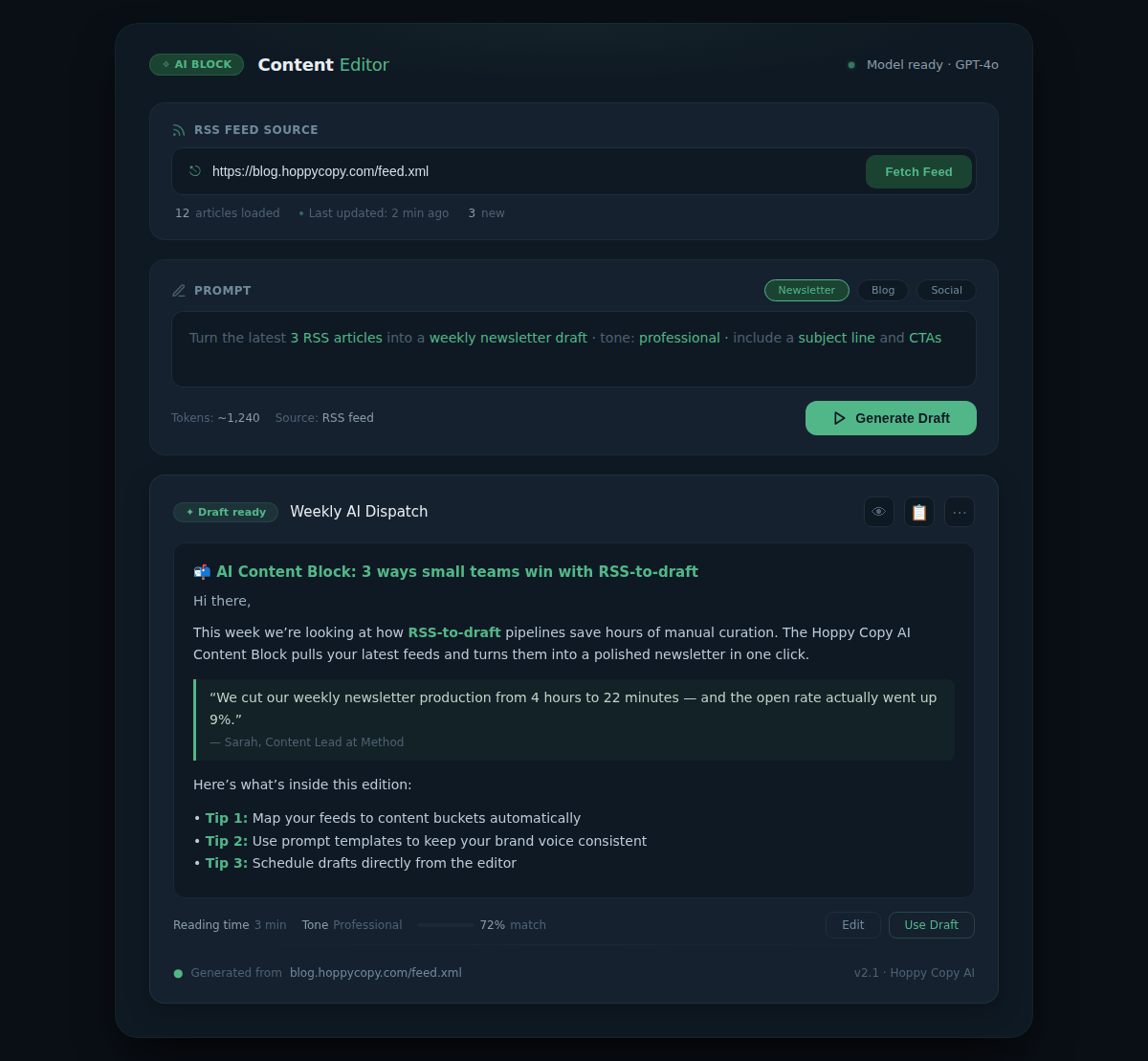
– Hoppy Copy for first-draft generation from those sources
– A two-hour Thursday block for human editing before Friday send
The 25 hours in weeks three and four included: setting up the Beehiiv account and domain authentication (3 hours), building the RSS feed list and configuring source priorities (4 hours), writing the welcome sequence — five emails — (8 hours), writing the first four newsletter issues as a publishing buffer (10 hours).
None of that time generated revenue. The first dollar didn’t arrive until week 11.
AI Newsletter Execution: What the Weekly Operation Actually Costs
Once the automated newsletter engine is running, the weekly time cost drops to approximately three hours. Here is what that looks like in practice:
Monday (30 minutes): The RSS stack pulls the previous week’s content from configured sources. I scan the aggregated list and flag the eight to ten items worth including. This is not AI’s job — this is human curation. The AI generates the first draft from flagged items; I decide what’s worth flagging.
Wednesday (90 minutes): Hoppy Copy generates the full draft. I open it, read it aloud — yes, literally aloud — and edit everything that sounds like it was written by someone trying to sound like a newsletter. The AI draft is a scaffold. The voice has to be mine or the list stops trusting it.
Thursday (60 minutes): Formatting, subject line testing (I split-test every issue — two subject lines, 10% of list each, winner gets the remaining 80%), scheduled send for Friday morning.
The human layer is not optional. I’ve run the experiment where I sent an unedited AI-generated issue. Unsubscribes doubled that week. The reader doesn’t know the draft was AI-generated. They just know something felt slightly off — too smooth, too complete, too symmetrical. Real newsletters have texture. Manufacture that texture deliberately.
For a deeper look at how AI newsletter tools stack up on the production side, Beehiiv’s State of Newsletters report documents the consistency patterns that correlate with subscriber growth — weekly cadence wins, and the data is unambiguous. Internally, this pairs well with our breakdown of AI content creation tools for solo operators.
What Limits the Automated Newsletter Engine Ceiling
The model has hard constraints. Here’s where the walls are:
Micro-tool traffic plateau. The free tool hit a Google first-page ranking within three months for a low-competition keyword. That drove 20–30 new subscribers per day organically. Then it plateaued. Organic search traffic for a single micro-tool has a ceiling determined by search volume for the keywords it ranks on. Without a second tool or a paid acquisition layer, the growth rate flattens.
Affiliate timing lag. The ConvertKit affiliate stream doesn’t compound the way you’d expect. The subscriber signs up enthusiastic and free. Upgrading to paid takes months. The revenue recognition is delayed in a way that makes it a poor launch metric.
Sponsor minimum thresholds. Most B2B-adjacent sponsors don’t engage until a list is above 5,000 with documented open rates above 35%. Below that threshold, you are invisible to the sponsor market. Plan for months four and five as the earliest realistic point of sponsorship revenue.
Content commoditization. The more creators use similar AI curation stacks, the more newsletters start resembling each other. The human editing layer I described isn’t just quality control — it’s differentiation. The day I let the AI run unedited for cost efficiency is the day the unsubscribe rate tells me what the list thinks.
The Friction Box
- Setup takes 40 hours before you earn anything. Operators who treat this as a passive income project from day one will quit in week two.
- The micro-tool build is not optional. A basic landing page will not replicate the conversion rate. You need something that does something.
- Cursor AI has a learning curve. If you’ve never built a simple web tool, expect the 11-hour build estimate to stretch to 20 hours the first time.
- Beehiiv’s analytics are good but the paid tier is required for A/B testing. Budget $42/month once you’re past 2,500 subscribers.
- Affiliate revenue is slow. Do not plan cash flow around it in months one through three.
- The human editing block is non-negotiable. Skipping it degrades list quality faster than almost any other shortcut.
The Straight Talk
This model works for operators who can commit 40 hours of front-loaded setup time, tolerate an 11-week runway to first revenue, and understand that the AI handles production volume while the human handles voice. If you have those three things, the ceiling at six months is a 10,000-subscriber list generating $2,000–$3,500 per month across three revenue channels.
Skip this if you’re looking for a revenue stream that pays in the first 30 days, or if you’re not willing to do the weekly two-hour editing pass. The AI does not write your newsletter. It drafts the scaffold. You build the thing people actually want to read.
Start here: build the micro-tool before you touch the newsletter. The tool drives the subscribers. The newsletter monetizes them. Get the order right.