TL;DR: Manual revenue reconciliation across multiple locations costs finance teams 8–15 hours per close cycle – and that number compounds with every new entity you add. Revenue reconciliation automation platforms cut that to under 2 hours by centralizing transaction matching, standardizing intercompany accounting, and eliminating the spreadsheet bridge between systems. The operators who need this are running 3+ locations with separate ledgers and a finance team that spends more time moving data than analyzing it.
Environment: Analysis based on platforms including BlackLine, Sage Intacct, FloQast, and Trintech Adra, evaluated against documented use cases from multi-entity operators as of Q2 2025. Test conditions reflect mid-market businesses operating 3–15 legal entities with transaction volumes between 2,000–50,000 monthly entries.
The Architecture: How Revenue Reconciliation Automation Works Across Entities
Here is the operational reality most multi-location operators are living in: Location A runs QuickBooks. Location B was acquired 18 months ago and still runs Sage 100. Corporate is on NetSuite. At month-end, your controller exports three files in three different formats, reformats them manually, and spends four hours reconciling intercompany transactions that should net to zero but never do on the first pass.
That is not a staffing problem. It is a systems architecture problem.
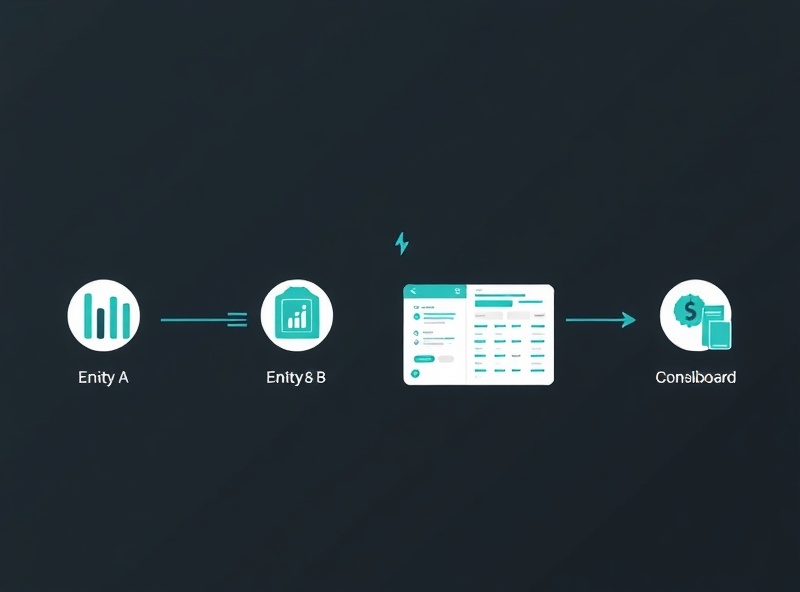
Specialized revenue reconciliation and automation platforms for multi-location businesses solve this by doing three things simultaneously. First, they ingest transaction data directly from each entity’s existing ledger – no manual exports, no CSV reformatting. Second, they apply AI-powered matching rules that compare transactions across entities and flag exceptions rather than requiring human review of every line. Third, they enforce a standardized chart of accounts across all locations, which is the piece most operators underestimate.
That last piece matters more than the matching algorithm. One subsidiary categorizing an expense as “Software Subscriptions” while another calls it “SaaS Licensing” creates reporting noise that no automation layer can clean up after the fact. The platform has to enforce consistency at entry, not at consolidation.
The result is a single dashboard that shows consolidated revenue, intercompany balances, and entity-level performance without requiring anyone to manually assemble the picture. Vertice, a documented case from multi-entity revenue management research, eliminated over eight hours of monthly multi-entity invoicing and revenue tracking after implementing this kind of centralized system. That is roughly one full business day recovered per close cycle — from one workflow change.
The Workflow Math: Revenue Reconciliation Automation Time and Cost Comparison
Before committing to any platform, calculate your actual bottleneck. The math here is straightforward once you map the current state.
A typical multi-location finance operation with three to five entities and no reconciliation automation looks like this:
| Task | Manual Time (Monthly) | Automated Time (Monthly) |
|---|---|---|
| Transaction matching across entities | 6–8 hours | 20–40 minutes (exceptions only) |
| Intercompany balance reconciliation | 3–5 hours | 30–60 minutes |
| Consolidation report assembly | 4–6 hours | Real-time (on-demand) |
| Compliance and audit trail prep | 2–3 hours | Near-zero (auto-logged) |
| Currency conversion and adjustment | 1–3 hours (if international) | Automated per feed |
| Total | 16–25 hours | 2–4 hours |
That 16–25 hour baseline is conservative. Operators running 8–12 entities with acquired subsidiaries on legacy systems routinely report close cycles consuming 30+ hours of senior finance staff time monthly. At a fully-loaded cost of $65–$90 per hour for a mid-level controller, that is $1,950–$2,700 in labor per close cycle, before accounting for the error correction that happens when something breaks.
Automated reconciliation platforms document match rates above 95% on routine transactions. BlackLine’s Verity AI and Sage Intacct both publish figures in this range under normal operating conditions. The remaining 5% routes to a clean exception queue – meaning your controller reviews 50 flagged items instead of manually processing 1,000 entries.
The platform cost for mid-market multi-entity reconciliation typically runs $1,500–$4,000 per month depending on entity count and volume. At the labor savings documented above, the payback period is usually under 60 days for operators with 5+ entities.
Where Multi-Location Revenue Automation Breaks: Failure Conditions to Know
This is where most platform evaluations go wrong. The vendor demo shows the clean state – standardized data, tidy matching, real-time dashboards. What it does not show is what happens during the first 90 days when your legacy data is inconsistent, your team is still running parallel processes, and the integration with your oldest subsidiary’s accounting system throws errors twice a week.
Four specific failure conditions show up repeatedly across documented implementations:
1. Chart of accounts migration is underestimated. Standardizing naming conventions across entities that have operated independently for years takes 3–8 weeks of dedicated finance staff time before the automation layer can function correctly. This is not a software problem – it is a data hygiene problem that the software cannot solve for you. Budget for it.
2. Intercompany transaction rules require manual configuration. The platform does not know that Location B charges Location A a $12,000 monthly management fee, or that the holding company allocates shared services costs on a revenue-percentage basis. Every intercompany rule has to be configured before the system can automate it. Enterprise implementations like BlackLine take 3-6 months for this reason. Midmarket platforms like FloQast run 6-12 weeks.
3. Multi-currency operations add a layer of manual judgment that automation cannot fully remove. Platforms automate the conversion calculation based on configured exchange rate feeds. They do not make the judgment call on whether to use transaction-date rates or period-average rates for a specific type of revenue. That policy decision still requires a human. Build it into your configuration phase, not your close process.
4. Approval workflows break when staff turn over. Automated reconciliation platforms route exceptions to named approvers. When that controller leaves and the system still routes to their email address, exceptions accumulate silently. Most platforms have role-based routing options – use them from day one, not after the first close cycle fails.

Revenue Reconciliation Automation: Selecting the Right Platform by Entity Count
The platform choice is not about features. It is about where you are in your growth curve and how much implementation friction you can absorb right now.
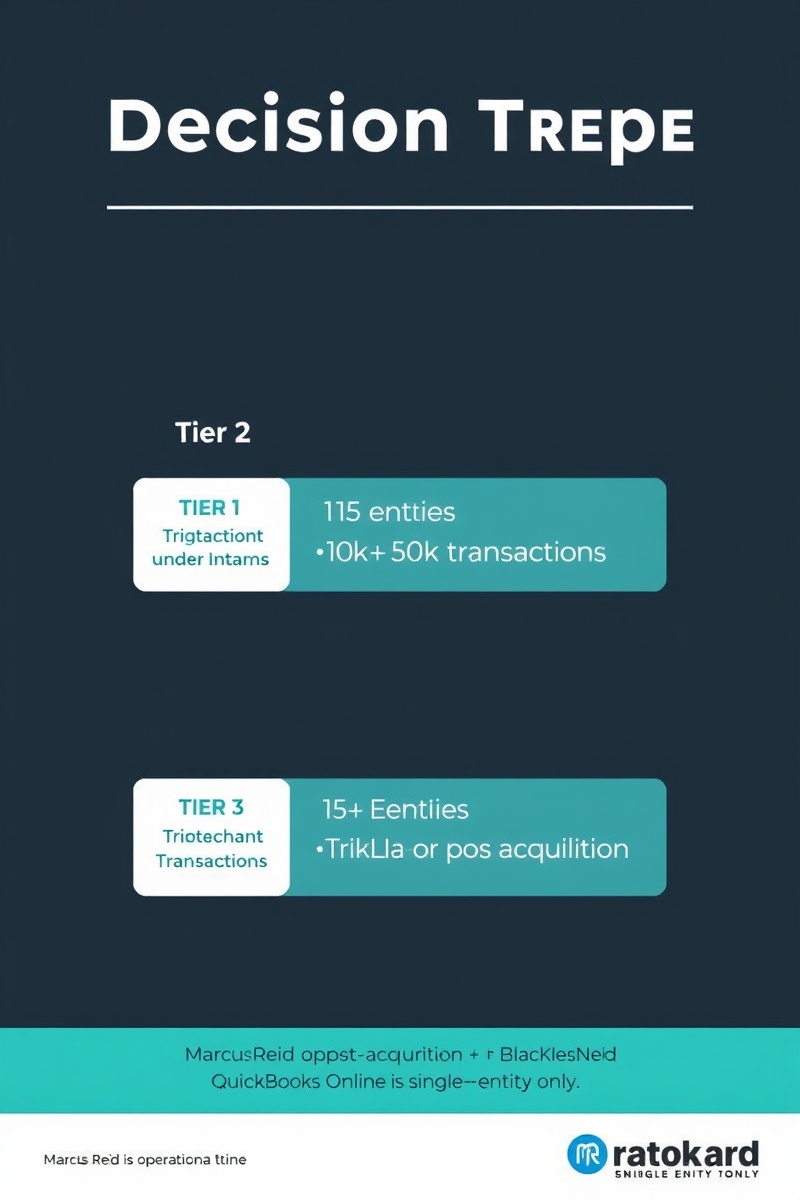
Under 5 entities, under 10,000 monthly transactions: Sage Intacct or FloQast. Both are configured for mid-market multi-entity operations and have published match rates above 95% in this volume range. FloQast is the better choice if your team is collaboration-heavy and your close process involves multiple reviewers. Sage Intacct wins if you need dimensional reporting across location, project, and entity simultaneously.
5–15 entities, 10,000–50,000 monthly transactions: Trintech Adra Suite or BlackLine. The Adra modular architecture is operationally smarter for growing teams – you can deploy transaction matching first, then layer in balance reconciliation and task management as the team scales. BlackLine has deeper compliance controls and handles higher volume ceilings, but the 3-6 month implementation and enterprise pricing are real costs that mid-market operators need to model before committing.
15+ entities or post-acquisition complexity: BlackLine with a dedicated implementation partner. At this scale, the compliance infrastructure and audit trail capabilities justify the premium. The implementation timeline becomes a fixed cost of doing business at enterprise scale, not an obstacle.
One note on QuickBooks Online: it automates 80–90% of routine matching within a single entity and costs nothing beyond the existing subscription. The hard limit is that it handles one entity only. If you are managing even two legal entities, QBO’s reconciliation function is not the right tool – it will force the manual consolidation step that the specialized platforms exist to eliminate.
For a deeper look at how automated reconciliation tools compare across use cases, Relay’s 2025 reconciliation software guide provides a thorough breakdown of seven platforms by company size and transaction volume.
The Friction Box
- Implementation is not plug-and-play. Every platform in this category requires 6-24 weeks of setup depending on entity count and data quality. Operators who expect to go live in two weeks will not.
- Chart of accounts standardization must happen before automation, not during. This is the work most finance teams want to skip. It cannot be skipped.
- Enterprise pricing is not published. BlackLine and Trintech both require vendor contact for pricing. Budget calls take time. Factor this into your evaluation timeline.
- Currency policy decisions are not automated. Platforms execute the math – operators still set the accounting policy.
- Role-based approval routing requires upfront configuration. Default named-user routing creates fragility. Fix it in week one.
- The 95% match rate applies to clean, standardized data. If your data has inconsistent naming, duplicate vendor records, or misclassified transactions, expect the match rate to drop materially until cleanup is complete.
The Straight Talk
This infrastructure is built for operators running 3 or more legal entities who are currently spending more than 8 hours per close cycle on manual reconciliation and consolidation. If your controller is exporting spreadsheets between systems every month-end, the labor cost already exceeds the platform cost – you are just paying for it in salary rather than subscription fees.
Skip this if you are running a single entity, regardless of how many physical locations you have. QBO or Xero reconciliation handles that load at no additional cost. The specialized platforms earn their price when the legal entity count creates reconciliation complexity — not when you open a second storefront.
Next step: Map your current close cycle by task and assign hour counts to each. If the total lands above 10 hours per month, request a scoped demo from Sage Intacct or FloQast with your entity count and monthly transaction volume ready. Both platforms will quote against those specifics, which gives you an actual payback calculation rather than a vendor pitch.
Frequently Asked Questions About Revenue Reconciliation Automation
What is revenue reconciliation automation?
Revenue reconciliation automation is a category of financial software that replaces manual transaction matching, intercompany balance verification, and consolidation report assembly with automated processes. These platforms ingest data directly from each entity’s existing ledger and apply AI-powered matching rules to flag exceptions rather than requiring line-by-line human review. The output is a consolidated revenue view and entity-level performance dashboard that does not require manual spreadsheet assembly at close.
How does revenue reconciliation automation differ from QuickBooks or standard accounting software?
Standard accounting software like QuickBooks Online handles reconciliation within a single legal entity – that is its design limit. Revenue reconciliation automation platforms are purpose-built for multi-entity operations: they ingest data from multiple disparate ledgers simultaneously and process intercompany transactions that single-entity software cannot handle. QBO’s reconciliation function reaches its hard limit the moment a second legal entity enters the picture.
What business size benefits from revenue reconciliation automation?
The practical threshold is 3 or more legal entities with a manual close cycle exceeding 8 hours per month. At 3–5 entities and under 10,000 monthly transactions, mid-market platforms like Sage Intacct or FloQast are the fit. At 5–15 entities and 10,000–50,000 monthly transactions, Trintech Adra Suite or BlackLine become the appropriate tier. Below 3 entities, QBO or Xero reconciliation covers the load without platform cost.
What are the main limitations of revenue reconciliation automation platforms?
Four documented limitations apply consistently across implementations: chart of accounts standardization must precede automation and takes 3-8 weeks of dedicated staff time; intercompany transaction rules require manual configuration before the system can automate them; multi-currency operations still require human policy decisions on exchange rate methodology; and approval workflow routing breaks when staff turn over if named-user routing is used instead of role-based routing from day one.
How long does revenue reconciliation automation implementation take?
Implementation timelines range from 6 to 24 weeks depending on entity count and data quality. Enterprise platforms like BlackLine require 3-6 months. Mid-market platforms like FloQast run 6-12 weeks. The primary driver of timeline is not the software configuration — it is the upfront work of standardizing chart of accounts naming across entities that have operated independently for years. Operators who budget for this phase in advance close faster.
What do we need in place before deploying revenue reconciliation automation?
Three prerequisites apply before go-live: a standardized chart of accounts across all entities (or a dedicated project to achieve it, budgeted at 3-8 weeks of finance staff time); documented intercompany transaction rules for every recurring settlement between entities; and role-based approval routing defined for exception workflows rather than named-user defaults. Operators who skip chart of accounts standardization will see match rates well below the documented 95% until cleanup is complete.